
To avoid ghosting candidates, publish a simple service standard and build it into your process: acknowledge every application, give every candidate an outcome, state a date for the next update, keep a “last contact” date for each active candidate and review it every week. Ghosting is mostly a workflow problem, not a character problem, so fix the workflow.
Key takeaways
- Ghosting happens when a process has no owner for the silent moments: after the application, after an interview, and after the decision.
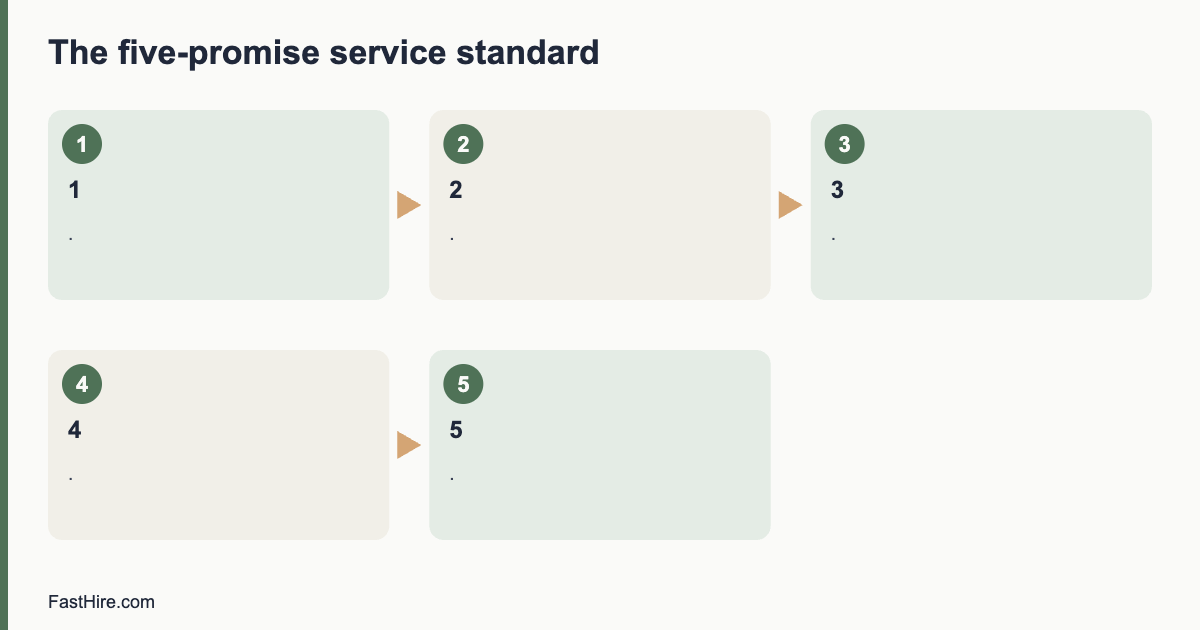
- A service standard has five promises: acknowledge, update, decide, tell, close. Put dates on each.
- Track “days since last contact” for every active candidate and review it weekly.
- Use templates so a kind decline takes one minute.
- Silence harms candidates and your reputation. Even a short, honest message helps.
What ghosting is, and why it happens
Ghosting means cutting off contact without an explanation. In hiring, employers ghost candidates when they go silent after an application or an interview. The cause is rarely bad intent. It is usually one of these: too many applicants, no template for declines, a hiring manager who has not decided, a recruiter who is overloaded, a role that is on hold, or a fear of awkward conversations.
| Cause | What it looks like | Fix |
|---|---|---|
| Volume | Hundreds of applications and no time to reply | Automated acknowledgement and outcome messages; screening sessions on fixed days |
| Waiting for a decision | Hiring manager delays; recruiter has no news to share | “No news” update with a date; response-time agreement |
| Role on hold or cancelled | The process pauses; nobody tells candidates | Close-out message as soon as the status changes |
| Awkward conversations | Declines feel uncomfortable | Templates and a short script |
| No owner | Nobody is responsible for follow-up | Name an owner for each role and a backup |
| Tool gaps | Applicants sit in a system without prompts | Reminders and a weekly list |
Silence costs more than it seems. Candidates tell friends and write reviews. Some will be future customers, partners or colleagues. Fairness also matters: a person who receives no outcome cannot move on or learn. A clear service standard is a modest investment with a high return. See our candidate experience checklist for the full journey.
The five-promise service standard
| Promise | Standard (example) | Who owns it |
|---|---|---|
| 1. Acknowledge | Every applicant receives an acknowledgement within one working day, with the closing date and the date of the next update | Recruiter or system |
| 2. Update | Every active candidate hears from us at least every seven days, even if there is no news | Recruiter |
| 3. Decide | We give an outcome within two working days of each interview or task | Hiring manager and recruiter |
| 4. Tell | Every candidate receives a clear outcome, including those declined at screening | Recruiter |
| 5. Close | When a role is filled, paused or cancelled, we tell all remaining candidates within two working days | Recruiter |
Publish the standard on your careers page and in the ad. Choose times you can keep. Track performance. If you cannot meet a promise, change the promise or the process. A published standard also helps hiring managers understand what they must do. See candidate update email cadence for message timing.
Build the standard into the workflow
Give every application a status
Use a short list of statuses: received, screened, call, interview, task, finalist, offer, hired, declined, withdrawn, on hold. Each status has a rule for the next message.
| Status | Message due | Maximum days in this status |
|---|---|---|
| Received | Acknowledgement (same day) | Until screening day, as stated in ad |
| Screened: declined | Decline within 2 working days of the screening date | 2 |
| Screened: invited | Invitation within 2 working days | 2 |
| After interview | Thank you and date within 1 day; outcome by the date given | As stated |
| Finalist | Update every 3 to 5 days | Until decision |
| On hold | Notice when put on hold; update every 7 days | Review monthly |
| Hired or role closed | Close-out to all remaining candidates | 2 |
Keep a “last contact” date
For every active candidate, record the date and type of the last message. Add a column for “next update due”. Sort by this column each morning. Anything in the past is a risk of ghosting. A simple spreadsheet is enough for a small team. In a tracking system, use filters or tasks.
Hold a ten-minute weekly review
Every Friday, list active candidates with no contact for five days or more, roles with no activity for seven days and decisions that are overdue. Send the messages that are due. Ask hiring managers for decisions by the next working day. This review prevents most ghosting.
Put the deadline in the ad
Write “We will reply to every applicant by [date]” in the ad. Then do it. A public promise gives you a reason to prioritise it.
Templates for the hard moments
Decline at screening
Hello [Name],
Thank you for applying for [job title]. We reviewed your application against the requirements for the role. We will not move forward with it at this stage. We appreciate your interest and wish you every success.
Best wishes,
[Name]
Role on hold
Hello [Name],
We are pausing the search for [job title] while we review our plans. We do not yet know when it will restart. We will write again by [date] to tell you what has changed. If you would like us to withdraw your application, please reply and we will do so.
Best wishes,
[Name]
Role cancelled
Hello [Name],
We have decided to close the [job title] search. We are sorry for the late news and appreciate your time. If you agree, we will keep your details for [period] and contact you if a similar role opens. Please reply “no” if you prefer that we delete them.
Best wishes,
[Name]
After an interview with no decision yet
Hello [Name],
Thank you for your interview on [date]. We have not yet made a decision. We expect to contact you by [new date]. If your situation changes in the meantime, please tell us.
Best wishes,
[Name]
What to do when the volume is very high
If you receive hundreds of applications, you cannot write to each person by hand. Use automation with care. Send an automatic acknowledgement, then an automatic outcome message after screening. Write the text yourself and avoid cold language. Offer a way to reach a person. Do not let a system reject candidates without a person making the decision. See screening at volume. For legal context on automated decisions in the UK and EU, see our article on the EU AI Act and hiring tools and check the rules for your country. This is general information, not legal advice.
Working with hiring managers
Most ghosting at the interview stage comes from slow decisions. Agree response times in the kickoff meeting, share the service standard, and show the data. Say: “Our standard is two working days after an interview. This week we are at six days for two candidates. Can we decide by Thursday?” Offer help: a short debrief, a decision template or a call. See the recruiter kickoff meeting and how to run a debrief meeting. Make it easy for managers to say yes, no or “not yet, until [date]”.
Measure and report
| Measure | How to calculate | Target (set your own) |
|---|---|---|
| Acknowledgement time | Hours between application and acknowledgement | Within one working day |
| Outcome rate | Candidates who received an outcome divided by all candidates | 100 percent |
| Update gap | Days since last contact for active candidates | 7 days or fewer |
| Decision time | Working days from interview to outcome | Within the promise |
| Complaints | Number of “I never heard back” messages | Falling over time |
Report these to the hiring team each month. Celebrate improvements. If a number is poor, ask what blocked it. Do not use the numbers to blame individuals.
A worked example (fictional)
This example is invented. A recruiter of a mid-sized company discovers that 40 candidates have had no contact for more than two weeks after an interview. She sets up a status list, a “next update due” column and a weekly review. She writes five templates. In the first Friday review she sends 40 messages in about one hour: 25 declines, 10 holds with dates and 5 invitations. She publishes a service standard on the careers page. Over the next two months, the number of “I never heard back” emails falls from several each week to about one a month. She adds a line to the kickoff agenda about decision times and shares the monthly report with hiring managers.
A weekly review that keeps the standard alive
A service standard only works if someone checks it. Set a fixed 20-minute slot each week. The recruiter who owns the standard opens the applicant list for every open role and answers four questions. Does any applicant have no outcome and no message in the last seven days? Is any interviewed candidate waiting longer than the promised date for news? Are there hiring managers who owe feedback? Which messages are due this week?
Write the answers in a shared note, not in your head. Name each late item, the person who owns it and the day it will be fixed. If the same hiring manager appears on the list two weeks in a row, raise it with that manager directly and use the feedback guide linked below as a starting point.
| Weekly check | Owner | Fix if late |
|---|---|---|
| Applicants with no acknowledgement | Recruiter | Send the acknowledgement today |
| Applicants past the promised screening date | Recruiter | Send a short update with a new date |
| Interviewed candidates with no outcome | Hiring manager and recruiter | Agree the decision or a new date within one working day |
| Declined applicants with no message | Recruiter | Send the decline message today |
| Offers waiting for a reply | Recruiter | Call the candidate and ask if they need anything |
A short script for the hiring manager conversation
The hardest part of the standard is a manager who is busy and does not reply. Do not send a long complaint. Use a short, factual message, and offer a fix.
Hi Sam, three candidates interviewed last week are waiting for news. We told them they would hear by Friday.
Can you send your scorecards by noon tomorrow? If you need more time, I will tell the candidates the new date today.
If it helps, we can hold a 15-minute debrief tomorrow and decide together.
This message states the facts, names the promise to the candidate, gives a deadline and offers help. It does not blame. If the manager still does not reply, tell the candidates the truth: “We need a little more time and we will write again by Wednesday.” That is better than silence.
What to do when you have no news
Many ghosting cases start when a recruiter feels they have nothing to say. But “no news yet” is news. A candidate can plan around a clear date. They cannot plan around silence. Use this pattern: say what has happened, say what has not happened, give the next date, and give a contact.
Hello Priya, thank you for your patience. We have finished the interviews for the role, but the final decision is not made yet.
We will write to you by Thursday 17:00 with an outcome or an update.
If you accept another offer before then, please tell us so we can wrap up your application.
The last line respects the candidate. They may have other offers, and you are not asking them to wait with no information.
How to measure the standard without invented targets
You do not need industry statistics to measure this. Count your own numbers each month: the share of applicants who received an acknowledgement on the day, the share who received a final outcome, the number of days from interview to outcome, and the number of candidates who withdrew after waiting. Compare this month with last month. Set a target based on your own starting point, for example “reduce the number of interviewed candidates waiting more than the promised date by half”. Treat this as a planning target, not an external benchmark.
You can also ask every candidate one question at the end of the process: “How clear was our communication, from 1 to 5?” Keep the answers anonymous and read the free-text comments. They show where silence happens more clearly than any dashboard.
Common objections, and short answers
| Objection | Short answer |
|---|---|
| We get too many applicants to write to everyone. | Use a template and your system’s bulk send. A two-line decline sent late is better than none. See the update email guide below. |
| Declining people will cause arguments. | Short, neutral messages with no reasons beyond “we chose candidates whose experience was closer to the requirements” rarely start debates. Do not give detailed scores or personal comments. |
| The hiring manager has not decided. | Send the “no news yet” message with a date. Silence is the worse option. |
| A decline might create legal risk. | Keep the message factual and consistent for every applicant, and keep records. For legal questions in your country, ask a specialist. |
A calm, consistent standard protects your employer brand in a simple way: candidates who are treated with respect, even when they are declined, are more likely to speak well of you and to apply again later. That is a reasonable expectation, not a measured result, so judge it by your own repeat-applicant numbers over time.
Official sources for this topic: Acas: recruitment, ICO: recruitment and selection. These pages are maintained by the authorities and may change, so check them for the current text.
Frequently asked questions
What is candidate ghosting?
It is when an employer goes silent to a candidate, usually after an application or interview, without giving an outcome.
Why do employers ghost candidates?
Usually because of volume, slow decisions, unclear ownership or discomfort with giving bad news. It is a process problem that can be fixed.
Do I have to reply to every applicant?
It is good practice. A short automated acknowledgement and a clear outcome message take little time and protect your reputation.
What should I say if I have no news?
Say so, give the next date and thank the person. A short “no news” message is better than silence.
Can automation help?
Yes, for acknowledgements and status messages, if the text is clear and kind and a person makes decisions.
Related guides
- Hiring guides for recruiters and HR teams
- Candidate experience: a practical checklist for recruiters
- How to write a candidate update email cadence
- How to give fast interview feedback without cutting corners
- All hiring guides for employers
- How to write a rejection email that respects candidates
- How to give useful feedback to rejected candidates
This is general information, not legal advice.