Category: Small businesses and founders

Practical guides for first hires, job ads and quick screening, written for teams without an HR department.

  • A small business onboarding plan for the first 30 days

    A small business onboarding plan for the first 30 days

    A good onboarding plan for a small business has four parts: preparation before day one, a clear first week, goals and check-ins for weeks two to four, and a 30-day review. Give the new person a named guide, access to the tools they need, a short list of outcomes and regular time to ask questions. Plan it in writing, so that it does not depend on how busy you are.

    Key takeaways

    • Prepare before day one: equipment, accounts, schedule and a welcome message.
    • Week one is for orientation, safety, tools and meeting people. Do not overload it with tasks.
    • Set three to five outcomes for the first 30 days, and discuss them on day one.
    • Hold a short check-in every day in week one, then weekly.
    • End with a 30-day review that covers what worked, what is unclear and what comes next.
    x

    Why onboarding matters more in a small team

    In a large company there are systems, buddies and training teams. In a small business, the new person depends on you. If you are busy, they wait. A plan prevents the early weeks from turning into confusion, and it shows the person that you value them. It also protects you: the same checklist works for the second hire and the tenth.

    Onboarding is also where legal and safety duties start. Employers must give the right information and a safe workplace. For overviews, see GOV.UK on employing people, the US Department of Labor wage and hour fact sheets, and the Your Europe pages on hiring and managing staff. For workplace safety, check the national authority in your country, for example OSHA in the US, the Health and Safety Executive in the UK or the national labour inspectorate in your EU member state.

    Before day one: the 10-point checklist

    TaskWhoDone?
    Send a welcome message with the start time, address or link, dress code and who to ask forManager
    Prepare the workspace or the remote kit (laptop, phone, headset, accounts)Manager
    Create email, chat, software and file access, with the right levelManager or IT helper
    Complete contract, tax and payroll formsManager
    Complete right-to-work checks as the law requiresManager
    Prepare a one-page overview of the business, team and customersManager
    Choose a guide who is not the manager if possibleManager
    Block time in the calendar for the first weekManager and guide
    Write three to five outcomes for 30 daysManager
    Tell the team the start date and the roleManager

    Week one: a day-by-day plan

    DayFocusActivities
    Day 1Welcome and basicsTour or video call, meet the team, set up equipment, safety information, read the one-page overview, 30-minute talk about the outcomes
    Day 2Tools and processWalk through the main tools with the guide; watch one task done end to end; do a small supervised task
    Day 3Customers and productsLearn the products, the customers and the common questions; shadow a call or message session
    Day 4First real taskDo a real task with a guide present; get feedback the same day
    Day 5Review week one30-minute talk: what is clear, what is unclear, what to learn next; agree goals for week two

    Keep each day light enough to leave time for questions. A new person who feels lost for a week may decide to leave. Short daily check-ins of 10 minutes help you spot problems early.

    Weeks two to four

    WeekGoalCheck-in
    Week 2Do routine tasks with less help; learn the main systemsWeekly 30-minute meeting with the manager; daily quick message with the guide
    Week 3Take responsibility for one defined area; give a short update to the teamWeekly meeting; review one piece of work together
    Week 4Work independently on routine tasks; suggest one improvementWeekly meeting; prepare for the 30-day review

    Link the goals to the outcomes in the job description. If the role is new, see our guide to writing a job description for a role that does not exist yet, which explains how to write outcomes.

    The 30-day outcomes: how to write them

    An outcome describes what the person can do or deliver by day 30. Keep it measurable and fair.

    Weak outcomeBetter outcome
    Learn the systemCan enter and update orders in the system without help
    Get to know the customersHas answered 20 customer messages with a quality check by the guide
    Be proactiveHas suggested one change to the process and explained why
    Fit in with the teamHas met every team member and knows who to ask for each type of question

    Share the outcomes on day one so that there are no surprises. If the plan changes, update it together and write the change down.

    The role of the guide

    A guide is a colleague who answers questions and shows how things work. The guide is not the person’s manager or evaluator. The guide should:

    • Meet the person on day one and have lunch or a break with them
    • Explain unwritten rules, such as how to ask for time off and who answers which questions
    • Answer small questions without judgement
    • Introduce the person to others
    • Report to the manager if the person seems lost or unwell, in a helpful way

    Give the guide time in their own schedule. If you do not, the load falls on you or on a person who is already stretched. If you are the only manager and have no one else, schedule short daily slots with the new person and keep a shared document of questions and answers. Over time this becomes your handbook.

    Documents and training to cover

    TopicWhat to coverWhere to look
    SafetyEmergency exits, first aid, safe use of equipment, who to tell about an accidentNational health and safety authority
    PoliciesTime off, sick leave, expenses, data protection, equal opportunity, conductYour handbook or a one-page summary
    Data protectionWhat data the person will handle and how to keep it safeICO guidance in the UK; GDPR in the EU; your state laws in the US
    PayPay date, payslip, how to report errorsPayroll provider
    ToolsEmail, chat, project tools, filesGuide and manager
    Customers and productsWho they are and what they needManager and team

    Check-in questions

    Use the same five questions each week. Write the answers and act on them.

    1. What went well this week?
    2. What was confusing or took longer than expected?
    3. What do you need to learn or have to do your work?
    4. Is there anything about the team, the workload or the environment I should know?
    5. What would you like to focus on next week?

    Do not ask about health, family or personal matters. If the person shares something personal, listen and ask whether they need an adjustment. Follow the law on adjustments and leave, and take advice if needed.

    The 30-day review

    PartQuestions
    OutcomesWhich outcomes were met? Which were not? Why?
    LearningWhat does the person need to learn next? What training helps?
    RoleIs the role what both sides expected? What should change?
    Feedback to youWhat did the onboarding miss? What would you change?
    Next 60 daysSet three outcomes for the next period

    If there is a probation period, tell the person how the review links to it. Be clear and fair. If there are concerns, say so early, with specific examples, and agree a plan to improve. See the first hire plan for the full journey from the idea to the first day, and our guide on the cost of hiring to plan the budget for training time.

    Common mistakes

    MistakeEffectFix
    Starting without a workspace or accountsPerson waits; feels unwelcomeUse the 10-point list
    Giving real work with no help on day oneStress and errorsShow first, then supervise, then release
    No outcomesPerson does not know what good looks likeWrite three to five and share them
    Skipping check-ins when busyProblems growKeep 10 minutes daily in week one
    Only talking about tasksThe person feels isolatedAdd team time and a guide
    No feedback from the new personYou never improve the processAsk five questions each week

    A welcome message you can copy

    Hello [Name],

    We are glad you are joining us on [date]. Here is what to expect on your first day.

    Time and place: [time], [address or video link].
    Who you will meet: [manager name] and [guide name]. [Guide name] will be your first contact for questions.
    What to bring: [documents required by law, such as proof of the right to work; anything else].
    What we will do: a tour, meet the team, set up your equipment and talk about your first 30 days.
    Lunch: [arrangement].

    If anything changes or you have questions before then, please contact me at [phone or email].

    Best wishes,
    [Name]

    A worked example (fictional)

    This example is invented. A small bakery hires its first sales assistant. The owner prepares a one-page plan.

    WeekPlanOutcome by the end of the week
    1Safety and hygiene briefing, tour, meet the team, learn the till, shadow the guide, serve with supportCan use the till and explain the products with help
    2Serve customers with the guide nearby; learn opening and closing stepsCan open and close the shop with the guide present
    3Serve alone during quiet hours; take orders for cakesCan take a special order correctly
    4Serve during a busy period; suggest one improvement to the displayWorks independently on routine tasks; has made one suggestion

    At the 30-day review the owner asked the five weekly questions again. The new assistant said that the allergen information was the hardest part to learn. The owner added a laminated allergen chart behind the counter and a short quiz for future hires. The review improved the process for the next person.

    Make it inclusive

    • Ask all new starters whether they need any adjustment to get started, such as step-free access, written instructions, a quiet space or flexible breaks. Offer it in a neutral way.
    • Share the schedule early so that people with caring duties or religious observance can plan.
    • Use plain language and avoid idioms in written material, especially if staff speak English as a second language.
    • Give the same training and the same feedback to everyone in the same role.
    • Do not assume that a person needs less or more help because of age, sex or origin. Ask what would help.

    An inclusive start improves retention and makes the team stronger. It also reduces the risk of unfair treatment.

    Frequently asked questions

    How long should onboarding last?

    A structured plan for the first 30 days is a good start. Many roles need 60 to 90 days to reach full speed. Keep check-ins going during that time.

    What if I have no time?

    Block short slots in your calendar and use a written plan. A guide or a recorded walkthrough of key tasks also saves time.

    Should onboarding be different for remote workers?

    Add a stronger first week: send equipment early, schedule video calls, explain tools and make sure the person knows who to ask. Remote workers can feel isolated.

    When should I give the contract?

    Before or on the first day. In many countries the law requires written terms by a set time. Check your official guidance.

    What do I do if the new hire is struggling?

    Talk early and specifically. Ask what is hard, offer help and agree on a short plan with dates. See our upcoming guide on what to do when a new hire is not working out.

    Related guides

    This is general information, not legal advice.
  • How much does it cost to hire an employee? A cost worksheet

    How much does it cost to hire an employee? A cost worksheet

    The cost of hiring an employee is more than the salary. Add employer taxes and contributions, benefits, equipment, advertising, your own time, training and a period when the new person is not yet at full speed. This guide gives a worksheet you can copy, a fictional worked example, and notes on how the pieces differ in the US, UK and EU.

    Key takeaways

    • Plan for the full cost, not only the salary or wage.
    • Group costs into four layers: pay, legal on-costs, set-up costs and hiring and ramp-up costs.
    • Use official calculators and rate pages for tax and contribution rates. They change, and they differ by country and region.
    • Write the total as a yearly figure and a first-year figure. The first year is higher.
    • Check your cash flow for the first 6 months before you post the job.
    x

    The four layers of hiring cost

    Think of the cost as four layers. Each layer answers a different question, and you can estimate each one on its own.

    LayerQuestion it answersExamples
    1. PayWhat does the person receive?Salary or hourly wage, bonus, commission, paid holiday
    2. Legal on-costsWhat must I pay because I am the employer?Employer taxes and social contributions, pension contributions, insurance, statutory leave and sick pay
    3. Set-up and running costsWhat does the person need to do the job?Laptop, phone, software licences, desk, training, uniform, travel
    4. Hiring and ramp-up costsWhat does it cost to find and start the person?Job board fees, agency fees, your time, interview time, onboarding, slower output in the first months

    Most first-time employers count only layer 1. Layers 2 to 4 often add a large share on top, and the share depends on the country, the role and how you hire. We do not give a single percentage here, because a reliable number needs a source for your country and year. Use the official pages in the next section.

    Where to find the official figures

    Rates for employer taxes, contributions and minimum pay change often. Do not copy a rate from an old blog post, including this one. Check the official page for your country on the day you plan the budget.

    RegionWhat to checkOfficial source
    United StatesFederal employment taxes, workers’ compensation and state rules. Wage and overtime rules.SBA: hire and manage employees and US Department of Labor: wages and the FLSA
    United KingdomEmployer National Insurance, workplace pension duties, minimum wage, holiday and sick pay.GOV.UK: employing people and National Minimum Wage and National Living Wage rates
    European UnionRules differ by country. Check your own national tax and social security authority.Your Europe: hiring and managing staff

    Ask a payroll provider or an accountant for a quote on the exact on-costs for your first hire. Many offer a free estimate. This is general information, and your own advisor can apply it to your facts.

    The cost worksheet

    Copy this table into a spreadsheet. Fill in the “Amount” column with yearly figures in your own currency. Put one-off costs in the first-year column only.

    LineTypeYearly amountFirst-year only
    Base salary or wagePay
    Bonus or commission (expected)Pay
    Paid holiday and public holidaysPay (included in salary, but affects hours worked)
    Employer taxes and social contributionsLegal on-cost
    Pension or retirement contributionLegal on-cost or benefit
    Insurance (for example workers’ compensation, employer liability)Legal on-cost
    Health or other benefitsBenefit
    Laptop and phoneSet-up
    Software licencesRunning
    Desk, chair or remote work allowanceSet-up
    Training and certificatesRunning
    Job ads and job board feesHiring
    Agency fee (if used)Hiring
    Background or right-to-work checks (if charged)Hiring
    Your time and your team’s timeHiring (see below)
    Relocation or sign-on payment (if any)Hiring
    Reduced output in the first 2 to 3 monthsRamp-up (see below)

    How to price your own time

    Your time is not free, even if no invoice arrives. Estimate the hours: writing the ad, reading applications, screening calls, interviews, notes, references, the offer, paperwork and onboarding. For a small team, 30 to 60 hours across the whole process is a reasonable range to plan for if you use a simple process, and it can be more without one. Multiply the hours by an hourly value for your time. A simple way to set the value is your own yearly pay or draw divided by the hours you work in a year. The result is an estimate, not an accounting entry, but it helps you compare options such as an agency fee against your own hours.

    How to price the ramp-up period

    A new person needs time to reach full output. Pick a number of months, then pick a percentage of output for each month. For a simple role you may use 50 percent in month one, 75 percent in month two and 100 percent from month three. For a complex role the period is longer. Treat the unproductive share of the salary as a hiring cost. These are planning assumptions, so write them down as assumptions and adjust them after your first hire.

    A fictional worked example

    This example is invented to show the arithmetic. The numbers are round and do not represent any real salary, tax rate or company. A small shop plans to hire one part-time customer support agent.

    LineAssumption (fictional)Amount per year
    Base wage20 per hour, 20 hours per week, 52 weeks20,800
    Employer on-costsAssume 15 percent of wage after checking the official page and asking the accountant3,120
    BenefitsAssume a fixed monthly allowance of 50600
    Software licencesHelp desk tool at 25 per month300
    Equipment (one-off)Laptop and headset1,100
    Job ads (one-off)Two job boards300
    Owner time (one-off)40 hours at 30 per hour1,200
    Ramp-up (one-off)Equal to 40 percent of the first month’s wage347

    Yearly running cost: 20,800 + 3,120 + 600 + 300 = 24,820. One-off costs in the first year: 1,100 + 300 + 1,200 + 347 = 2,947. First-year total: 27,767. The wage is 20,800, so the full first-year cost is about 33 percent higher than the wage alone in this example. In another country or role the gap will be different. The point is the method: list each line, mark what is yearly and what is one-off, and add them.

    Three ways to lower the cost, and what each one risks

    OptionHow it can lower costWhat to watch
    Hire part-time or for fewer hoursLower wage and lower variable on-costsCheck minimum hours rules and whether the role can be done in fewer hours
    Use a simple process and do it yourselfAvoids agency feesCosts your time. Use a fixed process so it stays short. See how to hire without HR
    Hire a contractor or freelancerNo employer on-costs and no benefitsMisclassification can be expensive. Read the official rules, for example the IRS guide to contractor or employee in the US

    Do not lower cost by cutting corners that create risk: skipping contracts, paying below the minimum wage, ignoring holiday pay or paying in cash without records. These shortcuts often cost far more later in penalties, claims or a lost team member.

    The cost of getting it wrong

    A hire who does not work out adds cost: a second round of ads, more of your time and a second ramp-up. A clear role, a fair process and evidence-based screening lower that risk. Read our guide to what a bad hire really costs for a method to estimate it without invented statistics. Also see how to write a job ad that attracts the right applicants, because a clear ad lowers the number of unsuitable applications you must read.

    A 30-minute budget routine

    1. Minutes 0 to 5: Write the role in one sentence and the hours per week.
    2. Minutes 5 to 10: Decide the pay range after checking local market data and the legal minimum.
    3. Minutes 10 to 15: Open the official page for your country and note the employer on-costs. If unsure, write “ask accountant”.
    4. Minutes 15 to 22: Fill in the worksheet, yearly and first-year columns.
    5. Minutes 22 to 27: Add the hiring costs: ads, your hours, any agency fee.
    6. Minutes 27 to 30: Compare the first-year total with your cash for 6 months. If you cannot cover it, change the hours or the timing.

    Repeat the routine after you hire. Compare your estimate with the real figures. The gap tells you which lines to adjust for the next hire.

    Common mistakes

    • Using last year’s rates. Rates change. Check the official page each time.
    • Forgetting the first-year costs. The first year is the most expensive year.
    • Ignoring your own time. If your time is limited, it is the scarcest resource you have.
    • Counting only the salary range from the ad. The person costs more than the number in the ad.
    • Not planning for the end of the probation period or a pay review. Add a line for a likely raise in year two.

    Questions to ask your accountant or payroll provider

    A short call with a professional saves mistakes. Bring your worksheet and ask these questions. Write the answers next to the matching lines.

    1. What are the exact employer taxes and contributions for this role in my country and region, for this year?
    2. Which insurance must I hold before the first day of work?
    3. Is a pension or retirement contribution required, and from what start date?
    4. How are holiday pay, sick pay and public holidays handled in payroll?
    5. Which tax filings and registrations do I need before I pay the first wage?
    6. What is the cheapest legal way to run payroll for one person?
    7. Does the role qualify for any official hiring support or tax credit? Ask for the official source, and check it yourself.

    When to revisit the numbers

    Update the worksheet at four points: when you set the pay range, when you make the offer, at the end of the probation period and at the first pay review. At each point, replace assumptions with real figures. After the first year, keep a one-page record of the estimate against the real cost. This record is the most useful tool for your second hire, because you will know which lines you under-estimated.

    If the full cost is above your budget, change one variable at a time: the hours per week, the start date, the scope of the role or the pay range. Do not change several at once, because then you cannot see which change helped. A role that is clear and focused also lowers cost, because it needs less training and less correction. See our guide to writing a one-page role brief before you finalise the budget.

    Frequently asked questions

    How much extra should I add on top of the salary?

    There is no single number that is correct everywhere. It depends on the country, the region, the benefits and the type of contract. Use the official rate pages and ask an accountant or payroll provider for a quote for your case.

    Is it cheaper to hire a freelancer?

    Often the day rate is higher, but you may not pay employer on-costs or benefits. The rules on who counts as a contractor are strict, so read the official guidance before you decide.

    Should I include my own time in the cost?

    Yes, as an estimate. It does not change your bank balance, but it shows the true effort and helps you compare options.

    What costs are easy to forget?

    Equipment, software licences, training, insurance, holiday cover and the ramp-up period are the most common ones.

    Do I need to tell candidates the pay in the job ad?

    In some places the law now requires a pay range, or a range on request. Check the rules where you hire.

    Related guides

    This is general information, not legal advice.
  • What you can and cannot ask in a job interview: US, UK and EU

    What you can and cannot ask in a job interview: US, UK and EU

    In an interview, ask about the skills, experience and availability that the job needs. Do not ask about protected characteristics such as age, sex, pregnancy and family plans, race, ethnic origin, religion, sexual orientation, disability and health, or similar traits. The principle is the same in the US, UK and EU, but the lists, terms and enforcement differ, so check the rules where you hire.

    Key takeaways

    • Ask only what you need to judge the person’s ability to do the job.
    • Protected traits differ by country but the core list is similar: age, sex, race, religion, disability, and more.
    • You can ask about a task and about availability. You should not ask for the reason behind a trait.
    • Health and disability questions before a job offer are restricted in the US and UK. Ask about the ability to do the tasks, with adjustments.
    • Use a written question list so that no one improvises a risky question.
    x

    The rule of thumb

    Before you ask a question, finish this sentence: “I need this answer to decide whether the person can do ____.” If you cannot fill in the blank with a task or a requirement of the job, do not ask. A question that touches a protected trait can lead to a claim even if you meant no harm, because the law looks at what you asked and what you did, not only at what you intended.

    What the law covers, by region

    RegionWhat it coversOfficial source
    United StatesFederal law prohibits discrimination in hiring on grounds that include race, colour, religion, sex (including pregnancy, sexual orientation and gender identity), national origin, age (40 and over), disability and genetic information. State and local laws can add more.EEOC: prohibited employment policies and practices
    United KingdomThe Equality Act 2010 protects nine characteristics: age, disability, gender reassignment, marriage and civil partnership, pregnancy and maternity, race, religion or belief, sex and sexual orientation. Rules also limit health questions before an offer.Acas: recruitment and GOV.UK: checks employers can make on job applicants
    European UnionEU directives ban discrimination in employment on grounds of religion or belief, disability, age and sexual orientation, and on racial or ethnic origin. Sex equality rules exist in separate EU law. Each country adds its own rules.Directive 2000/78/EC and Directive 2000/43/EC, then national law

    The exact list and the exact exceptions depend on the place. In some places the law treats an interview question as evidence of how you made your decision. Keep to job-related questions so that you have a record of fair treatment.

    Questions to avoid, and what to ask instead

    TopicDo not askAsk instead
    Age“How old are you?” “When did you graduate?” “Where do you see yourself in 20 years?”“Are you able to meet the minimum age required for this role by law?” (only when the law sets a minimum age, such as for some work with alcohol or machinery)
    Family and plans“Are you married?” “Do you have children?” “Do you plan to have children?”“This role needs travel on two weekends a month. Can you do that?” Ask this of everyone
    Pregnancy“Are you pregnant or planning to be?”Nothing. Do not ask. Describe the tasks and ask whether the person can do them
    Health and disability“Do you have a disability?” “Have you ever been ill or off sick for a long time?”“This role includes lifting 15 kilos or standing for four hours. Can you do this, with or without adjustments?”
    Race and origin“Where are you really from?” “What is your native language?”“This role needs fluent written English. Can you show how you use English at work?”
    Nationality and right to work“Are you a citizen?” “What is your visa?”“Are you legally able to work in [country] now or by the start date?” Ask all candidates the same question, and do right-to-work checks as the law requires
    Religion“What church or temple do you attend?” “Do you celebrate holidays?”“This role needs work on Saturdays. Is the schedule workable for you?” Ask everyone the same way
    Sexual orientation and gender identity“Are you gay?” “Is your partner supportive?”Nothing. Do not ask
    Politics and unions“Which party do you support?” “Have you joined a union?”Nothing relevant to most jobs. Do not ask
    Money“What is your current salary?” (restricted in some places)“What pay range are you looking for?” Check local rules on salary-history questions
    Criminal record“Have you ever been arrested?”Rules vary by place. Ask only if the law allows and the role needs it. See official guidance

    The “ask instead” column describes the task or the requirement and asks everyone the same question. This is the safe pattern. Say what the job needs, then ask whether the person can do it.

    What you can safely ask

    • Work history, tasks done and results achieved
    • Skills, tools and training linked to the role
    • Availability for the hours and days needed
    • Ability to meet stated, job-related requirements, such as travel or a licence needed for the work
    • Reasons for applying to this role
    • Examples of how the person solved work problems
    • Whether the person needs any adjustment for the interview process itself

    Questions about a licence, such as a driving licence, are fine when the job needs driving. Questions about a certificate are fine when it is a legal or practical requirement. Keep each question linked to a written must-have from your role brief.

    When a candidate shares personal information

    Sometimes a candidate says, “I am expecting a baby in the spring” or “I have a health condition”. You did not ask, but you now know it. What to do:

    1. Do not follow up with more questions on that topic.
    2. Say, “Thank you. Let us return to the role.”
    3. Do not write it in your notes.
    4. Make your decision only on the job-related scorecard.
    5. If the person asks for an adjustment, note the request and respond as the law requires. In the UK, the duty to make reasonable adjustments applies to disabled applicants. In the US, the Americans with Disabilities Act requires reasonable accommodation for qualified applicants, at employers covered by the law.

    Remember that the safest record is a scorecard that shows you scored the person on the job criteria only.

    Small talk can be a trap

    Friendly chat at the start or end of an interview often drifts into family, age, home town and plans. Prepare a few neutral topics: the journey, the weather, a recent public event that is not political, or a question about the building. Avoid asking about weekends, holidays, children, accents and “where are you from?”. If a candidate brings up a topic, listen, but do not follow it with questions about protected traits.

    Phone and video interviews

    The same rules apply. On video you may see more of a person’s home, age, religion or disability. Treat that as information you did not request. Do not comment on it and do not use it. If a candidate seems to need an adjustment, such as more time, ask in a neutral way, “Is there anything that would help you in this conversation?”

    What to do if a manager asks a risky question

    If you manage others who interview, give them a one-page guide with the “do not ask” table. If someone asks a risky question, correct it right away and keep a note. Move the questions to a written list. Our guide to the interview scorecard shows how to build one. If a candidate complains, take the complaint seriously, record it and get advice from an employment lawyer or a body such as Acas in the UK.

    A pocket checklist

    Before the interviewDone?
    Written list of job-related questions
    Must-haves match the role brief
    “Do not ask” table printed
    Neutral small talk topics chosen
    Offer of adjustments sent with the invitation
    Scorecard ready
    Notes sheet ready (no protected traits)

    If you also use social media or background checks, keep the same principles: check only what the job needs, apply it to all, and follow the law. For the rest of the hiring process, see our first hire plan and the first interview guide.

    Examples (fictional) of how a risky question becomes a safe one

    SituationRisky versionSafe version
    The role needs travel to client sites for one week each month“Your kids are young, how will you manage the travel?”“This role includes one week of travel each month. Is that possible for you?”
    The role needs standing for long periods“Do you have back problems?”“This role needs standing for most of a six-hour shift. Can you do this, with or without adjustments?”
    The team works with international clients“Are you a native English speaker?”“You will write to clients in English. Can you share an example of written work in English?”
    The shop opens on Sundays“Do you go to church on Sundays?”“The shop opens on Sunday. Are you available on Sundays?”
    The role is physically demanding“You look young, can you handle it?”“Describe the physical tasks you have done in earlier jobs.”

    The safe version names the real demand of the job and asks every candidate. It gives you the information you need and respects the candidate’s privacy.

    Training your team in 20 minutes

    1. Share the “do not ask” table with everyone who interviews, including friends who help you.
    2. Ask each person to rewrite three risky questions in a safe form.
    3. Compare the new versions and agree on one standard list.
    4. Role-play a short interview in which the candidate shares personal information. Practise a calm, neutral reply.
    5. Store the question list where every interviewer can find it.

    Repeat this short session once a year or whenever a new interviewer joins. It costs less than one hour and lowers the risk of an unfair interview and a costly dispute.

    Keep records

    Keep your question list, the scorecards and the notes for the time the law requires in your country, and delete them afterwards as data protection rules require. Records show that you asked about the job and not about the person. Do not keep notes on protected traits. Store the records securely and give access only to people who need them for hiring.

    If you are unsure about a question, test it with two checks. First, would you ask every candidate the same thing? Second, can you point to a written requirement of the job that the answer helps you judge? If either answer is no, drop the question and look for a different way to learn what you need.

    Frequently asked questions

    Can I ask a candidate if they are legally allowed to work here?

    Yes, in the form of a question you ask every candidate, for example “Are you able to work in this country now or by the start date?” Do the formal right-to-work check as the law requires for every person you plan to hire.

    Can I ask about gaps in a CV?

    You can ask neutral, open questions such as “Tell me about what you did between these dates”. Do not assume the reason and do not ask about health or family. Treat all candidates the same.

    Is it OK to ask a candidate what pay they expect?

    In many places yes. Some US states and cities restrict questions about current or past pay. Check the rules where you hire.

    Can I ask whether the candidate can do the job with adjustments?

    Yes, once you have described the tasks. Ask everyone the same question and be ready to discuss adjustments.

    What if I asked an illegal question by mistake?

    Pause, apologise, do not use the answer in your decision and note what happened. Take advice if the candidate raises it later.

    Related guides

    This is general information, not legal advice.
  • How to screen applications quickly: a 20-minute method for small teams

    How to screen applications quickly: a 20-minute method for small teams

    You can screen a batch of applications quickly and fairly with a three-pass method. Pass one checks each resume or CV against your must-haves in about 30 seconds. Pass two records the evidence for the people who pass. Pass three turns the evidence into a short list. For a pile of 40 applications, this takes about 90 minutes in total, split into short sessions.

    Key takeaways

    • Write the must-haves before you open the first application, and do not change them while you read.
    • Pass one: yes, no or unclear against each must-have. Do not rank.
    • Pass two: note the exact line in the CV that supports each yes. No line, no yes.
    • Pass three: invite everyone who meets all the must-haves, up to the number you can interview.
    • Remove names, photos and personal details where you can, and keep a record of every decision.
    x

    Before you start: set up the screen

    Screening goes wrong when it starts before the criteria exist. Prepare three things.

    1. The must-haves. Three to five items, each answerable yes or no from a resume or CV. If you have not written them yet, start with our guide to job requirements candidates can actually check.
    2. A screening sheet. One row per candidate and one column per must-have, plus a notes column and a decision column.
    3. A time box. Decide how long you will give each pass, for example 30 seconds, 2 minutes and 10 minutes. A time box prevents the habit of reading the first twenty applications closely and the last twenty barely at all.

    If more than one person screens, agree the meaning of each must-have first. “Experience with customers” can mean a retail job to one person and a call-centre job to another. Write one example of what counts and one of what does not.

    Pass one: the 30-second check

    For each application, look only for the must-haves. Mark each as yes, no or unclear. Do not form a view of the person. Do not look for reasons to reject beyond the must-haves.

    MarkMeaningExample for “one year of customer support work”
    YesThe CV clearly shows it“Customer support agent, 2022 to 2024”
    NoThe CV clearly shows it is missing, or the applicant states they do not have itOnly warehouse work listed, and no related volunteering
    UnclearThe CV could support it but does not say“Helped customers” in a shop job with no length given

    Treat unclear marks with care. A CV is a summary, and many strong candidates write poorly about themselves. For unclear marks, plan to send one short question by email, as in the templates below. Do not treat unclear as no.

    What to leave out of pass one

    • Name, photo and address. Cover or ignore them where you can. The US Equal Employment Opportunity Commission says employers generally should not ask for an applicant’s photo before hiring, on its page about prohibited employment policies and practices.
    • Age, graduation year and dates that hint at age. They are not must-haves.
    • Gaps in work history. A gap is not a requirement. Ask about it only if it affects a must-have, and then ask neutrally.
    • Schools and employers you like. Brand names are not evidence of skill.
    • Typos in a CV. Count them only if the role needs careful writing, and then only as evidence for that must-have.

    Pass two: write down the evidence

    For each candidate who has no “no” marks, spend about two minutes finding the exact words in the CV that support each yes. Copy the line or note it in your own words. This takes a little time, but it does three useful things. It prevents you from saying yes because the CV feels good. It makes it easy to explain your decision later. And it gives the interviewer the right questions to ask.

    Here is an example row for a “customer support assistant” role.

    Must-haveEvidence from the CVMark
    1 year of customer support work“Support agent, Brightside Pets, Mar 2022 to Jun 2024: handled email and chat”Yes
    Clear written EnglishCover note is clear and organised; no errors affecting meaningYes
    Comfort with new software“Introduced a new ticket tool for a team of four”Yes
    Available five days a weekNot statedUnclear, ask

    FastHire is being built to make this step easier: it shows each job requirement next to the exact CV passage that supports it, so a person can check the evidence quickly. FastHire is coming soon. It does not rank, score or reject candidates. You make every decision, whether you use a spreadsheet or a tool.

    Pass three: build the short list

    Count the candidates with all “yes” marks. If you can interview all of them, invite them. If you have more than you can see, do not rank. Use a neutral rule that you write down before you apply it. Options include random selection among those who meet all must-haves, or applying one extra criterion that you already published as a “nice to have”. Document the rule.

    Random selection among equals sounds odd, but it is fair, quick and easy to defend. If a candidate wants to know why they were not invited, you can say that many people met the requirements and that you used a neutral method to select interviewees.

    Emails to send during screening

    Asking one question about an unclear mark

    Subject: One question about your application for [role]

    Hello [name],

    Thank you for applying. To complete our review, could you tell us [one specific question, for example: how many days a week you are available]? A short reply is fine.

    Please reply by [date]. We will tell you the outcome by [date].

    [Your name]

    Inviting a candidate to the next step

    Subject: Next step for [role]

    Hello [name],

    Thank you for your application. Your experience matches the requirements we listed, and we would like to invite you to [next step, for example a 20-minute call]. Please choose a time here: [link or two options]. Tell us if you need any adjustment, such as a different format.

    [Your name]

    Declining after screening

    Subject: Your application for [role]

    Hello [name],

    Thank you for applying for [role]. We received many applications and have decided to continue with candidates who show [the must-have they did not show, for example at least one year of customer support work] in their application.

    We wish you well in your search.

    [Your name]

    Send the decline within the date you promised, even when the message is short. Candidates remember employers who answer. Keep the message honest and specific, and do not make promises about future roles unless you mean them.

    A 20-minute version for very small teams

    If you only have a handful of applications, you can run all three passes in 20 minutes. Spend five minutes writing the must-haves, ten minutes on pass one and pass two together (reading each CV once and noting the evidence as you go), and five minutes deciding who to invite. The rule that must not change is the order: criteria first, evidence second, decisions third.

    How to keep screening fair and lawful

    Screening is a decision point, so equal treatment matters. Use the same written must-haves for every application. Do not ask about, or draw conclusions from, protected characteristics such as age, sex, race, religion, disability or pregnancy. Keep your sheet and your notes, because they show that you used job-related criteria. In Great Britain, the Acas page on recruitment explains how discrimination law applies to choosing who to interview.

    Applicant data is personal data. In the UK and the EU, data protection law applies, and you should tell applicants how you will use their data and delete it when you no longer need it. The Information Commissioner’s Office explains the rules in its guidance on recruitment and selection.

    A note on automated screening tools

    Some software scores or ranks applicants automatically. These tools can create legal and fairness risks, and in some places they trigger specific duties. If you use a tool, keep a person in charge of every decision, ask the vendor how it works and what data it uses, and check the rules for your location. Our guide to hiring without an HR team covers record keeping, and our first hire plan shows where screening fits in the whole process.

    Common screening mistakes

    • Screening while tired or rushed. Use short sessions, and re-check a sample at the end of the day.
    • Changing the must-haves after seeing the pile. Add a new criterion only if you apply it to everyone from the start.
    • Rewarding polished CVs. Some people write better CVs than they do work. Look for evidence, not style.
    • Never telling candidates the outcome. A short decline is better than silence.
    • Skipping notes. Without notes you cannot explain or repeat your decisions.

    A worked example: twelve applications in about 40 minutes

    This example is invented to show the flow. It is not data from a real company. A small online shop advertises for a customer support assistant with four must-haves: one year of customer support work, clear written English, comfort with new software and availability five days a week. Twelve people apply.

    StepWhat the reviewer doesResult
    Set up (5 min)Writes the four must-haves, one example of what counts for each, and the screening sheetSheet ready
    Pass one (12 min)Reads each CV for about one minute against the four must-havesSeven applicants have all yes marks, three have one unclear mark, two have a clear no
    Questions (5 min)Sends one email to the three applicants with an unclear mark, asking about availabilityTwo reply with yes, one does not reply by the date
    Pass two (12 min)Notes the exact CV line behind each yes for the nine remaining applicantsEvidence recorded for each
    Pass three (5 min)Invites all nine, because the shop can interview nine in two daysNine invitations sent
    Decline emails (5 min)Sends the short decline to the two clear no applicants and to the one who did not replyAll applicants informed

    Nothing in this process needed a ranking. Every candidate was judged against the same four statements, and each decision can be explained in one sentence.

    Calibrating with a second reviewer

    If two people screen, calibrate first. Both read the same five applications alone, mark them against the must-haves and then compare. Where you disagree, decide what the must-have means and write the example in the sheet. This takes 15 minutes and removes most later arguments. After screening, the second reviewer can also check a sample of the “no” decisions, for example every fifth one, to catch errors. A short second look is cheap compared with losing a strong candidate by mistake.

    Frequently asked questions

    How many applications should I read closely?

    Read all of them once against the must-haves, which takes seconds each. Read closely only the ones that pass pass one, and note the evidence.

    Is it fair to reject applications that miss one must-have?

    Yes, if the must-have is genuinely essential, written down before screening and applied to everyone. If it is only a preference, it should not be a must-have.

    What do I do with a candidate who has a gap in their CV?

    Do not treat the gap as a reason to reject. If it affects a must-have, for example the length of experience, ask a neutral question about the work they did.

    How long should I keep rejected applications?

    Keep them only as long as you need them, and tell applicants how long that is. Rules differ by country, so check the guidance of your data protection regulator.

    Should I use AI to screen resumes?

    Some tools can help you read faster, but the decision should stay with a person, and local rules may apply. Ask the vendor how the tool works and keep your own records.

    Related guides

    This is general information, not legal advice.

  • How to hire without an HR team: a simple process that works

    How to hire without an HR team: a simple process that works

    You can hire well without an HR team if you write the role down, use one simple process for every candidate, keep short records and give each task a named owner. HR teams add structure and memory. A small business can add the same two things with a spreadsheet, a shared inbox and a few templates.

    Key takeaways

    • Give hiring one owner and one backup. Unowned tasks are the main reason small teams lose good candidates.
    • Use a seven-step process every time: brief, advertise, screen, interview, check, offer, onboard.
    • Keep three records: the role brief, a candidate sheet and interview notes.
    • Treat law as a checklist by country: right to work, written terms, payroll registration and non-discrimination.
    • Ask an accountant, payroll provider or employment adviser for what you cannot check yourself.

    What an HR team normally does for you

    Before you build a process, it helps to know what you are replacing. In a company with an HR team, HR usually covers these jobs.

    • Structure: a standard way to open a role, approve it and close it.
    • Writing: job descriptions, ads, offer letters and contracts.
    • Fairness and law: consistent questions, non-discrimination, right-to-work checks and written terms.
    • Records: who applied, who was interviewed, why decisions were made and when data was deleted.
    • Onboarding: accounts, equipment, payroll set-up and a first-week plan.
    • Memory: what worked last time and what to change.

    You do not need a department for any of these. You need a repeatable routine and a place to write things down.

    x

    Step 1: Name an owner and set the ground rules

    Choose one person to run each hire from start to finish. In a very small business, that is the founder or the office manager. Choose a backup who can answer candidates if the owner is away. Then write three rules on one page.

    1. Speed: every applicant gets a first reply within a set time, for example five working days.
    2. Fairness: every candidate for the same role is judged on the same written must-haves and gets the same core questions.
    3. Records: the owner keeps one folder per role with the brief, the candidate sheet and the interview notes.

    Step 2: Write a one-page role brief

    The brief is the most useful document in hiring. It keeps you honest when a charming candidate turns up. Keep it to one page with five parts: the purpose of the role, three to five outcomes for the first 90 days, the main tasks, the must-haves and the working conditions including the pay range.

    Keep the must-haves short and checkable. “Two years of bookkeeping work in any setting” can be checked in a CV. “Great attitude” cannot. Our guides on must-haves and nice-to-haves and checkable job requirements show how.

    Step 3: Advertise in a way you can manage

    Post the job where your future colleagues look, and set a closing date. A closing date lets you read all applications together. Use a shared email address, such as jobs@yourcompany, so that applications do not sit in one person’s inbox. Add one question to the application, for example “Tell us about a time you solved a problem like the one in this role”, so that you can see how people write and think.

    Write the ad from the brief. For a worked example, see our first hire plan. Avoid wording that points to a protected group. The US Equal Employment Opportunity Commission explains the rule on job ads on its page about prohibited employment policies and practices.

    Step 4: Track every candidate in one sheet

    A spreadsheet is enough for a small business. Use one row per candidate and these columns.

    ColumnWhat to writeWhy it matters
    Name and contactAs given by the candidateSo that you can reply
    SourceWhere they found the adShows which channels work
    Must-have 1 to 5Yes, no or unclear, with a note from the CVShows the evidence behind each decision
    StageApplied, screened, interviewed, offered, declined, rejectedShows what to do next
    Last contact dateThe date you last wrote to themPrevents candidates from waiting without news
    Delete byThe date you will delete their dataSupports data protection rules

    Share the sheet only with the people who need it. It holds personal data, so protect it with a password or access control and delete it on schedule. In the UK and the EU, data protection law applies to applicants. The UK Information Commissioner’s Office explains the rules in its guidance on recruitment and selection.

    Step 5: Screen and interview the same way each time

    Screen against the must-haves only. Then plan six to eight interview questions that match the outcomes in the brief. Ask each candidate the same questions in the same order. Write notes during or straight after the interview. Score each answer on a simple scale, such as 1 to 4, and write one sentence about what the person said or did.

    A small business can run this with two people in the room: one asks, one writes. Afterwards, each person scores alone before you compare. This reduces the pull of the first strong impression.

    Step 6: Make the checks you need

    Checks protect you and the candidate. Keep them short, and make the same checks for everyone in the same role.

    • References: ask permission first, and ask each referee the same questions.
    • Right to work: this is a legal duty in the US, the UK and EU member states, and the method differs. In the UK, follow the GOV.UK guide to checking a job applicant’s right to work. In the US, you complete Form I-9 after hiring.
    • Qualifications or licences: check only those that the role really needs.

    Step 7: Make the offer, then onboard

    Confirm the offer in writing with the job title, start date, pay, hours, location, notice period and any probation period. Then complete the legal set-up. The US Small Business Administration lists the main steps for US employers. The GOV.UK recruiting and hiring page lists them for the UK. In the EU, the rules are national, so ask your payroll provider or labour authority.

    Prepare day one before the person arrives: equipment, accounts, a buddy and a first-week plan. Our first hire plan has a simple 30-day structure.

    Who does what: a simple split for a small team

    TaskOwnerBackup or helper
    Role briefHiring owner with the future managerFounder
    Ad and applicant inboxHiring ownerOffice manager
    ScreeningHiring owner and the future manager separatelySecond reviewer for a sample
    InterviewsFuture manager and one other personHiring owner
    Right-to-work and payroll set-upOffice manager or founderAccountant or payroll provider
    Contract and legal questionsFounderEmployment adviser or lawyer

    When to bring in outside help

    You do not have to do everything yourself. Pay for help with the parts where an error is costly or hard to see: employment contracts, dismissals, immigration or visa questions, pay and benefits law, and anything that looks like a discrimination claim. In the UK, the free helpline and guides at Acas are a good first place to look for recruitment questions.

    Common mistakes when you have no HR team

    • Hiring by conversation only. Without notes, you remember the best talker, not the best candidate.
    • Changing the requirements after you have met someone you like. Write the must-haves first and keep them.
    • Letting applicants wait. Silence loses good people and harms your reputation.
    • Keeping every resume forever. Set a deletion date and follow it.
    • Skipping the written offer. A verbal promise causes disputes later.

    A weekly rhythm that keeps hiring moving

    Set a fixed 30-minute slot each week while a role is open. Use it to read new applications, update the sheet, send replies and book interviews. In most small teams, speed comes from this rhythm, not from more tools.

    FastHire is being built to help with the reading step, by showing each job requirement next to the exact CV passage that supports it. FastHire is coming soon. It does not rank, score or reject candidates. You and your team make every decision.

    Templates you can copy today

    Short, plain messages save time and treat candidates with respect. Adapt the wording to your own voice.

    1. Acknowledging an application

    Subject: Your application for [role]

    Hello [name],

    Thank you for applying for [role] at [company]. We close applications on [date]. You will hear from us by [date], whether or not we invite you to interview.

    If you need any adjustment to take part in the process, such as a different interview format or extra time, please tell us and we will arrange it.

    [Your name]

    2. Inviting a candidate to interview

    Subject: Interview for [role] on [date]

    Hello [name],

    We would like to invite you to an interview for [role]. It will take about 45 minutes, on [date] at [time], at [place or video link]. You will meet [names and job titles].

    We will ask about your recent work and how you would handle examples from this role. You do not need to prepare slides or tasks. If another time or format would suit you better, tell us and we will find one.

    [Your name]

    3. Declining a candidate after interview

    Subject: Your interview for [role]

    Hello [name],

    Thank you for the time you gave us. We have decided to continue with another candidate, whose experience matched the role more closely on [one specific, job-related reason].

    We liked [one real strength]. If you would like short feedback, reply to this message and we will send it.

    [Your name]

    4. A one-page interview note template

    FieldWhat to write
    Candidate and dateName, role, interviewer
    Question 1 to 6What the candidate said they did, in one or two lines
    Evidence for each must-haveQuote or note from the interview or CV
    Score for each answer1 to 4, using the same scale for every candidate
    Open questionsWhat you still need to check, for example a reference
    RecommendationMove on, hold or decline, with the reason in one sentence

    A worked example: a six-person design studio hires an office manager

    A studio with six people has no HR team. The founder, Lena, owns hiring and her colleague Tom is the backup. Lena writes a one-page brief: purpose (keep the office running so designers can focus), three outcomes (invoices sent weekly, supplier orders on time, a tidy calendar), five must-haves (one year of administration work, clear writing, accuracy with numbers, comfort with spreadsheets, availability five days a week) and a pay range.

    She posts the ad for two weeks. Forty-one people apply. She reads them in one sitting against the five must-haves and marks yes, no or unclear. Twelve have all yes marks and four have unclear marks. She sends the four a single question by email. Three answer, so fifteen candidates move on. Tom and Lena each phone-screen for 15 minutes using three questions. Six candidates reach a one-hour interview with the same eight questions. They score alone, then meet for 20 minutes to compare notes. Two candidates tie, so they use a short paid task that mirrors real work: tidy a messy supplier list in 30 minutes. Lena checks two references for the top candidate and sends a written offer. This sample is an illustration only. The numbers are invented to show the flow, not results from any study or customer.

    The whole process takes about five weeks, including the notice period. No special software is used. What makes it work is the written brief, the shared sheet and the same questions for everyone.

    Frequently asked questions

    Do I need HR software to hire without an HR team?

    No. A spreadsheet, a shared inbox and a calendar are enough for most small teams. Consider software when you run several roles at once or when the sheet becomes hard to protect and keep tidy.

    What is the minimum paperwork for a hire?

    You should keep the role brief, the candidate sheet and your interview notes, plus a written offer and the legal documents your country requires, such as right-to-work checks and written terms.

    How do I keep hiring fair without an HR person?

    Use the same written must-haves and the same questions for every candidate, score each answer on a fixed scale and record your reasons. Do not ask about protected characteristics.

    Who should interview candidates?

    The future manager and one other person who understands the role. Two interviewers make notes more reliable and reduce the effect of personal preference.

    How long should I keep applicant data?

    Keep it only as long as you need it, and set a deletion date. Rules differ by country, so check your regulator’s guidance. In the UK, see the ICO page linked above.

    Related guides

    This is general information, not legal advice.
  • What a bad hire really costs, and how to lower the risk

    What a bad hire really costs, and how to lower the risk

    A bad hire costs more than the salary you paid. You also pay for recruitment time, training, errors, lost customers, extra work for colleagues and the cost of hiring again. There is no single trusted figure that fits every business, so the useful step is to estimate your own cost with a simple worksheet and then reduce the risk with a fair, evidence-based process.

    Key takeaways

    • Count five cost groups: pay and benefits, hiring costs, lost output, damage to others and the cost to replace.
    • Use your own numbers. Averages from other firms rarely fit a small business, and many published figures have no clear source.
    • Most mis-hires start before the interview: a vague role, an unclear must-have list or a rushed process.
    • Ten controls lower the risk: a written brief, checkable must-haves, structured interviews, work samples, references, a clear offer, onboarding, early check-ins, fair probation use and prompt action.
    • Fairness is part of risk control. A decision based on evidence is easier to defend and more often right.
    x

    What “bad hire” means

    A bad hire is a person who does not meet the main outcomes of the role after a fair chance. Sometimes the person lacks a skill. Sometimes the role was never clear, the manager gave little support or the person and the business did not suit each other. All three produce the same cost, so it helps to ask early: was this a person problem, a role problem or a management problem? The answer decides what to fix.

    Be careful with the label. A person who struggles in the first weeks is not a bad hire yet. Most people need time and support. Treat “bad hire” as a conclusion you reach after clear goals, honest feedback and enough time, not as a first reaction.

    The five groups of cost

    Cost groupExamplesHow to estimate it
    1. Pay and benefitsSalary, employer taxes and social contributions, pension or retirement contributions, insurance, equipment and software for the months the person workedMonthly cost of the person multiplied by months employed
    2. Hiring costsJob ads, agency fees, your time and your colleagues’ time to screen and interview, background checksHours spent multiplied by an hourly cost, plus fees
    3. Lost outputWork that was not done, done wrongly or redone; missed sales; delayed projectsValue of the outcomes expected minus what was delivered
    4. Damage to othersManager time spent coaching, colleagues covering gaps, customer complaints, a drop in team moraleHours of other people’s time multiplied by their hourly cost, plus any lost revenue
    5. Cost to replaceA second hiring process, a gap with no one in the role, onboarding and training the next personRepeat the hiring and onboarding estimate, plus the vacancy period

    Group 3 and group 4 are the hardest to measure and often the largest. You can still estimate them with honest ranges, for example “two hours a week of manager time for twelve weeks”.

    A worksheet you can copy

    Open a spreadsheet and fill in these lines. Use your own figures. The example below is arithmetic to show how the sheet works, not a benchmark or a statistic.

    LineYour figureExample (hypothetical)
    A. Monthly cost of the employee (pay, taxes, benefits, equipment)[you fill in]3,500 per month
    B. Months employed[you fill in]4 months
    C. Hiring cost the first time (hours x hourly cost + fees)[you fill in]1,200
    D. Manager and colleague time lost (hours x hourly cost)[you fill in]60 hours x 30 = 1,800
    E. Value of lost or redone work and lost sales[you fill in]1,500
    F. Cost of the second hiring process and the vacancy[you fill in]1,400
    Total = A x B + C + D + E + F[you fill in]14,000 + 1,200 + 1,800 + 1,500 + 1,400 = 19,900

    When you do this for a real case, you usually find that the salary is less than half of the total. Use the total to decide how much time and money it is worth spending on a better hiring process. If one mis-hire costs more than a small business earns in a month, a few extra hours on a role brief and structured interviews are a bargain.

    Where mis-hires really start

    Look back at your last difficult hire. In most cases, the problem began in one of these places.

    • An unclear role. If you cannot say what the person must achieve in 90 days, you cannot judge a candidate or a new hire.
    • A wish list instead of must-haves. Long lists make you hire for charm or for the one flashy item.
    • An unstructured interview. A friendly conversation tests rapport, not skill.
    • No evidence. Decisions by feeling cannot be checked, repeated or defended.
    • Rushing. Urgency pushes teams to settle for the first acceptable candidate.
    • Weak onboarding. A good hire can fail because nobody explained what good looks like.

    Ten controls that lower the risk

    1. Write a one-page role brief with outcomes for the first 90 days. See our first hire plan for the format.
    2. Set three to five checkable must-haves and keep them fixed. See must-haves vs nice-to-haves.
    3. Advertise clearly, with pay, location and process, so that people can screen themselves. See how to write a job ad.
    4. Screen on evidence. Note the CV line that supports each must-have. See how to screen applications quickly.
    5. Use a structured interview. The same questions, the same order and a scoring scale for every candidate.
    6. Add a work sample for roles where you can test the real task in 30 to 60 minutes. Pay candidates for tasks longer than an hour.
    7. Check references with the same questions for each referee, after you ask permission.
    8. Make a clear written offer with the terms, so that nobody starts with different expectations.
    9. Onboard on purpose. Give a 30-day plan, a buddy and a check-in each week.
    10. Act early. If the first 30 days show a gap, say so, offer help and write down the plan. Do not wait for month six.

    Early warning signs, and what to do

    Most mismatches show up in the first month, but they only matter if you notice them. Watch for these signals and respond in a fair, documented way.

    SignalFirst response
    The person misses the first small deliverablesCheck that the goals were clear and the tools worked. Agree a short, specific target for the next week.
    The person asks few questions or hides problemsAsk for a short daily update for two weeks. Explain that questions are expected.
    Colleagues report frictionListen to both sides. Look for facts, such as missed handovers, not for personality labels.
    The person says the job is not what they expectedCompare the job as advertised with the job as done. If the ad was inaccurate, fix the ad and the role.

    Write notes after each conversation. If you later need to end the employment, the notes show what you said and when. Rules for notice, probation and dismissal differ by country and change over time. In the US, the Department of Labor describes federal rules on termination, and state law adds more. In the UK, GOV.UK explains dismissal rights, and Acas offers guidance for employers. In the EU, rules are mainly national. Ask an employment adviser before you dismiss anyone.

    Probation and trial periods: use them well

    A probation or trial period is a useful check, but it is not a safety net for a weak process. Rules differ widely. Some countries set a legal maximum, some do not use the concept at all, and employment protections may still apply during probation. Write the terms in the contract, set review dates (for example at 30, 60 and 90 days) and give honest feedback at each one. Our guide to the probation period in each country will cover this in more detail.

    The fairness side of risk

    A hiring process that follows written criteria is also a fairer process. Decisions based on evidence are easier to explain, and you reduce the risk of a discrimination claim. In the US, the Equal Employment Opportunity Commission lists the main rules on its page about prohibited employment policies and practices. In Great Britain, the Acas page on recruitment explains the duty not to discriminate when choosing who to hire.

    FastHire is being built around the same idea: show each job requirement next to the exact CV passage that supports it, so that people decide on evidence. FastHire is coming soon. It does not rank, score or reject candidates. People make every decision.

    A short post-mortem after a mis-hire

    If a hire does not work out, write a one-page review within a week. Answer five questions: What did we need? What did the ad and the interviews say we were getting? What did we see in the first 30 days? Which step in the process could have shown the gap earlier? What will we change in the next hire? Share it with the people who took part. The aim is to improve the process, not to blame a person. One honest review is worth more than any benchmark.

    A 30-day check-in script that catches problems early

    A short, structured conversation at 30 days is the cheapest control on this list. Block 45 minutes and use the same outline for every new hire. Share the questions a day earlier so that the person can think.

    1. What has gone well so far? Let the person speak first. Note specific examples.
    2. Which outcomes from the role brief are on track, and which are not? Go through the three to five outcomes one by one. Use facts, such as deliverables and dates.
    3. What has been harder than expected? Listen for gaps in tools, training or information that you can fix.
    4. What do you need from me? Offer support before you give criticism.
    5. What will we both do in the next 30 days? Write down two or three clear actions with dates.

    Then give your own feedback in the same order. A useful sentence has three parts: what you saw, why it matters and what you want to see next. For example: “The weekly report was two days late both times. The team plans its Monday around it. Please send it by Friday noon from now on, and tell me on Thursday if you are at risk.”

    Write a five-line summary after the meeting and send it to the person. If the 60-day check shows no progress on the same point, you have a record that you were clear and fair, and the person has had a real chance. If the person grows, you have also learned something about how to onboard the next hire.

    Decision table: stay, support or exit

    What you see at 30 to 90 daysLikely causeNext step
    Good outcomes, slow startNormal learning curveKeep the plan and review again in 30 days
    Mixed outcomes, willing and open to feedbackGaps in training or unclear goalsAdd training, clarify goals, check again in two weeks
    Missed outcomes and no change after clear feedbackSkill or fit mismatchTake advice on the legal steps in your country, then decide
    Conduct problems such as dishonesty or harassmentConduct, not performanceFollow your policy and the law at once, and take advice

    Use the table as a thinking aid, not a rule. Each case has its own facts, and local employment law may limit what you can do and how fast.

    Frequently asked questions

    How much does a bad hire cost?

    It depends on the role, the pay and how long the problem lasts. Use the worksheet above to estimate your own figure. Be careful with published averages that do not name their source.

    Is a bad hire always the candidate’s fault?

    No. Unclear roles, poor onboarding and weak management cause many failures. Ask what you could have done differently before you decide.

    How can I reduce the risk of a bad hire without spending much?

    Write the role brief, set checkable must-haves, ask the same questions of every candidate and check references. These steps cost hours, not money.

    Should I fire quickly if I realise it is a mistake?

    Act early, but fairly. Give clear feedback and a short chance to improve, write down what you say and follow the legal rules for your country.

    Do work samples help?

    They can, because they test the real task. Keep them short, relevant and accessible, and pay for longer tasks.

    Related guides

    This is general information, not legal advice.

  • How to hire your first salesperson without a sales manager

    How to hire your first salesperson without a sales manager

    To hire your first salesperson without a sales manager, first write down how you win customers today, then hire for the exact job: who the person will sell to, what they will sell, how they will find leads and how you will measure results. Test the skill with a realistic role-play and a short plan, keep pay simple, and set clear targets and a review date.

    Key takeaways

    • Document your own sales process before you hire. A salesperson cannot copy what is only in your head.
    • Define the job type: finding new customers, growing existing ones, or both.
    • Test the skill with a realistic role-play and a 30-day plan, not only with an interview.
    • Keep pay simple: a base plus a clear, written commission or bonus plan.
    • Plan onboarding and weekly coaching. A first salesperson without a manager needs structure from you.
    x

    Why the first salesperson is hard to hire

    A founder usually makes the first sales through personal contacts, passion and trial and error. A salesperson cannot copy that. If you do not explain who buys, why they buy, what you say and what happens next, the new person will invent a process and you will not know if it works. Without a sales manager, the founder is the manager, and the risk is high: a wrong hire costs months of pipeline time. Read our guide on what a bad hire really costs for a way to estimate that risk.

    This guide gives a seven-step method. It does not promise results and uses no sales statistics, because outcomes depend on your product, market and price.

    Step 1: Write down how you sell today

    Spend two hours and fill in this sheet. If you cannot answer a row, that gap is part of the job to hire for.

    QuestionYour answer
    Who buys? (role, company type, size)
    What problem do they have when they call you?
    Where do your best customers come from?
    What do you say in the first call?
    What are the common objections, and your replies?
    How long from first contact to a decision?
    What is your price, and how flexible is it?
    What do you promise, and what do you not promise?
    What happens after the sale?

    Step 2: Define the role type

    TypeMain taskSkills to testTypical risk
    New-business seller (hunter)Find and win new customersProspecting, cold outreach, resilience, pipeline habitsBurnout if leads are weak or the product is not ready
    Account seller (farmer)Grow existing customersRelationship care, upselling, serviceMay not find new leads
    Inside sellerSell by phone or videoClear speaking, listening, notesNeeds a good lead source
    Field sellerVisit customersPlanning, travel, local knowledgeHigher cost; harder to coach
    HybridBoth new and existingAll of the aboveRole may be too wide for one person

    Choose the type that matches your next 12 months. If you have more leads than time, hire for conversion. If you have few leads, hire for prospecting and decide how you will support lead generation.

    Step 3: Set a realistic target and pay

    Estimate a target from your own data: the average deal value, the number of deals you win in a month, and how many you could handle together. Do not copy a quota from the internet. Set the target for the first 90 days as activity and learning goals, such as number of qualified conversations and number of proposals, and set revenue targets from month four. A fair plan has three parts: a base salary, a variable payment and a clear rule for how the variable is calculated.

    ItemWhat to writeWhy
    BaseA fixed amount that allows the person to live without sales in the first monthsReduces desperation and bad selling
    VariableA percentage of revenue, a fixed amount per deal or a bonus on a targetAligns pay with results
    What countsWhich deals, when they count (signed, paid, delivered)Prevents disputes
    Cap or no capState clearlyAvoids surprise
    TimingWhen commission is paidCash flow clarity
    ChangesHow and when you can change the plan, with noticeFairness

    Put the plan in writing, in plain words. Check the law on pay in your country: in the US see the Department of Labor wage pages; in the UK, commission can affect holiday pay, see GOV.UK holiday entitlement; in the EU, national rules apply. Use the cost worksheet to price the full cost. This is general information, not legal advice.
    Step 4: Write an honest job ad

    Say what you sell, who buys, how leads arrive, what you offer as support and what the pay looks like. Candidates distrust vague promises such as “unlimited earnings”. Describe the real average setup in words, with no invented numbers. See how to write a job ad that attracts the right applicants.

    Step 5: Screen and interview for evidence

    Use a structured interview. Ask for past examples and numbers the candidate can explain. Verify them in references.

    AreaQuestionWhat a strong answer shows
    ProcessWalk me through the last deal you won, from first contact to signature.Clear steps, what they did, what they learned
    ProspectingHow did you find new leads in your last role? Which methods worked and which did not?Methods, effort, honesty about results
    ObjectionsTell me about a time a prospect said no. What did you do next?Resilience and listening
    TargetsWhat target did you have, and what did you reach? How did you plan your month?Real figures they can explain; planning
    Fit with a small companyWhat will you do when there is no marketing team or sales manager to help?Self-direction, simple tools
    EthicsTell me about a time you decided not to make a sale. Why?Honesty and long-term thinking

    Use the same questions for every candidate and score with a scale. Our guides on structured interviews and the first interview show how. Avoid questions on protected traits. See what you can and cannot ask.

    Step 6: Run a role-play and a 30-day plan

    A work sample shows the skill. Give finalists a made-up product or your real product description and 20 minutes to prepare. Then play a prospect for 15 minutes. Score on a written guide: discovery questions, listening, handling an objection, clear next step. Ask them to send a one-page plan for their first 30 days. Do not ask for free real work, such as calling your real prospects. See how to run a work sample test for fair design and pay rules.

    Step 7: Check references and decide

    Ask referees for facts: the role, the targets, the results, the way the person worked with others. Check numbers that the candidate gave. A reference from a former manager is more useful than a friend. See how to check references.

    Onboarding a salesperson without a sales manager

    You are the manager, so plan your time. Block weekly one-hour coaching and a short daily check-in in the first month.

    WeekFocusOutput
    1Product, customers, your sales sheet from step 1, shadow your callsPerson can explain the offer and the buyer in five minutes
    2Role-play with you, review of past deals, tools set upPerson makes first outreach with your review
    3First calls and meetings with you listeningPipeline sheet started
    4Weekly plan and numbers; review what works30-day review and plan for the next 60 days

    Add a simple tracking sheet for leads, conversations, proposals and decisions. Review it weekly. Use the sheet to coach, not to blame. See the first 30 days onboarding plan.

    Mistakes to avoid

    • Hiring a salesperson before you have a repeatable way to find leads or an offer you can explain.
    • Promising a lead flow that does not exist.
    • Paying only on commission for a new product with no brand. This transfers all the risk to the person and can attract the wrong applicants. Check legal minimum pay rules, which apply in many countries.
    • Setting a target from a competitor’s numbers, not your own.
    • Choosing the most charming candidate without evidence of results.
    • Leaving the person alone for a month with no feedback.

    Be fair and honest. A salesperson who leaves because the job was misdescribed leaves a gap and a story in the market. A clear, honest process protects both sides.

    A worked example (fictional)

    This example is invented. A founder of a small software company sells to dental clinics. She documents her process: she finds clinic managers through a local association, calls them, runs a 20-minute demo and sends a proposal. She decides to hire a new-business seller with a base salary and a commission on signed annual contracts. She writes an honest ad and interviews six people with the same questions. Two finalists do a role-play: a dental clinic manager who worries about data privacy. One finalist asks discovery questions and offers a next step. The other talks about features for ten minutes. The founder scores the first higher. References confirm the finalist’s story. In the first month the founder spends one hour each week on coaching, and reviews the lead sheet. After 90 days they review activity numbers, not only revenue, and adjust the plan.

    A 30-60-90 day plan for the new salesperson

    PeriodGoals (activity and learning)Review question
    Days 1 to 30Learn the offer and buyer; shadow five of your calls; make first outreach with review; set up the lead sheetCan the person explain the offer and the buyer clearly, and do they use the sheet every day?
    Days 31 to 60Run own calls; book a set number of qualified conversations; send first proposals; weekly role-play on objectionsAre the conversations qualified, and which objection comes up most?
    Days 61 to 90Close first deals with your support; improve the script from real calls; plan the next quarterWhat changed in the script, and what is the first revenue signal?

    Set the number of conversations and proposals from your own data and your sales cycle. Do not copy numbers from the internet. Review the plan together at day 30, 60 and 90, and write down what you agreed. If the person is not meeting the plan, give specific examples and support early. If you have a probation period, explain how the reviews relate to it. See probation rules by country in the offer guide for the basics.

    What to measure

    • Activity: conversations held, meetings booked, proposals sent. These show effort and habit.
    • Quality: share of conversations that match your target buyer; reasons for lost deals.
    • Outcome: deals won and their value, once the sales cycle allows.
    • Learning: changes made to the script and the lead sheet.

    Review activity and quality weekly. Review outcomes monthly. Be cautious with a single month’s revenue, because small samples are noisy. If you have only a few deals a quarter, one deal changes the picture a lot. Use a longer window and the reasons for lost deals.

    Fairness in a commission plan

    Use clear rules and apply them to everyone. Do not change the plan retroactively. If you hire more than one salesperson, define how territories and leads are shared, so that the person with better leads does not earn more for the same effort. Avoid unlawful deductions from pay, and take advice on how clawbacks and caps are treated in your country. Keep records of targets and payments.

    Frequently asked questions

    Should my first salesperson be paid only on commission?

    Often a mix is fairer. Many countries have minimum pay rules that apply regardless of commission. Pure commission transfers all risk to the person and can attract the wrong applicants.

    Can I hire a salesperson before I have sales systems?

    You can, but write down your process first. Without it, the person cannot repeat what works.

    How long until a new salesperson produces results?

    It depends on your sales cycle. Set expectations from your own cycle length, not from general claims.

    What if I am not a good sales manager?

    Start with a simple weekly routine: review the lead sheet, listen to calls and role-play. Consider an advisor or mentor with sales experience.

    Should I hire an agency or freelancer first?

    It can be a lower-risk way to test the channel. See employee or contractor for the rules on status.

    Related guides

    This is general information, not legal advice.
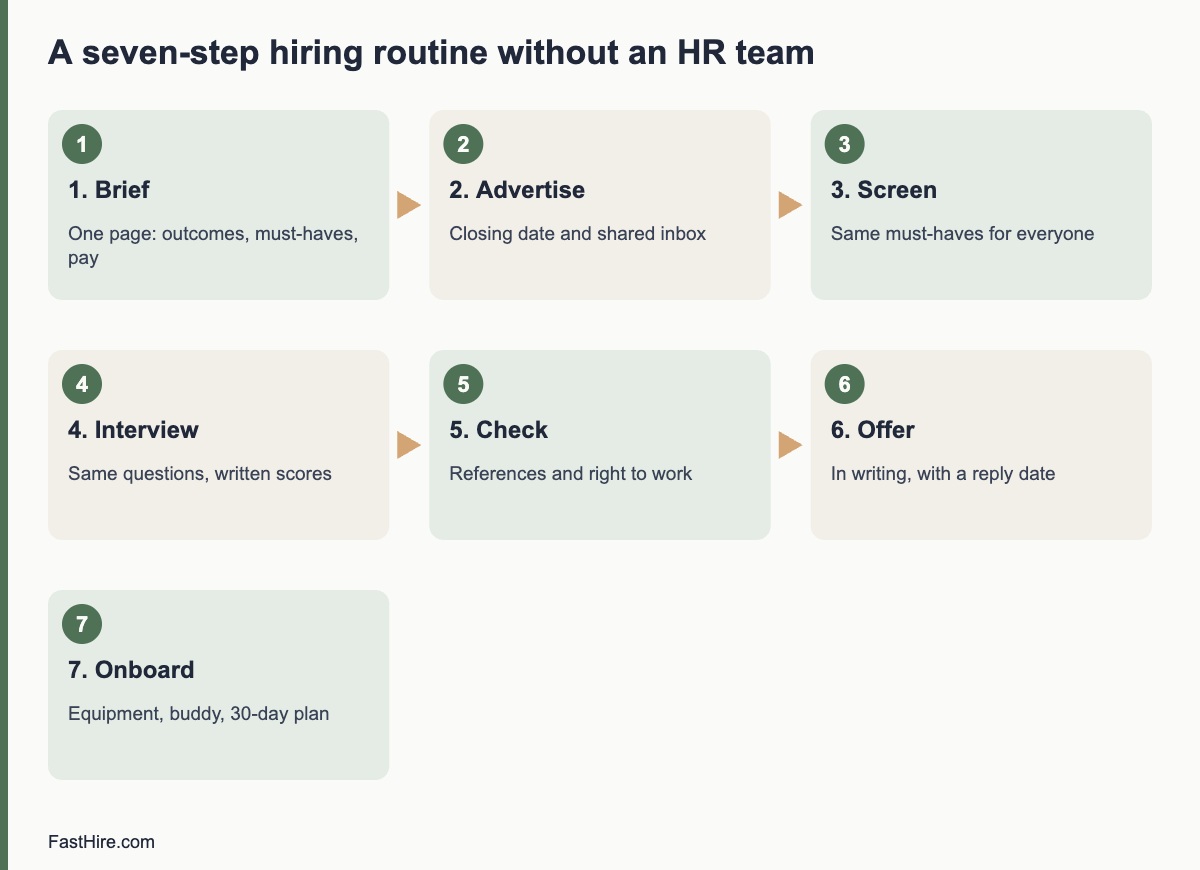
  • How to hire in another country: a first guide for small employers

    How to hire in another country: a first guide for small employers

    To hire an employee in another country, first confirm why the role must be in that country, then choose a legal route: hire directly through a local company, use an employer of record, or engage a contractor if the facts support it. Check local employment law, tax and social contributions, right to work, data protection and company registration rules with a local adviser before you make an offer.

    Key takeaways

    • Employment law, tax and social contributions follow the place where the person works, and often where they live. Your home rules do not travel with the job.
    • There are three main routes: your own local entity, an employer of record, or a contractor. Each has costs and risks.
    • A person working for you in another country can create tax and legal duties for your company, even with no office.
    • Check right to work, data protection and pay rules before you recruit, not after.
    • Take advice from a local employment lawyer and accountant for the first hire.
    x

    Start with the reason and the facts

    Hiring abroad is more complex than hiring at home. Before you start, write down why. Reasons may include access to skills, serving customers in that market, time-zone cover or a person you already know who is moving. Then collect the facts: the country, the city or region, the job, the hours, whether the person will work remotely or on site, the expected length, and whether the person already has the right to work there.

    These facts decide which rules apply. Hiring a person who lives in Germany and works remotely for a US company is a different case from hiring a person in Poland to work in your Polish office. Always check the country-specific rules, because EU countries differ from each other as well. For an overview of EU staff rules, see Your Europe: hiring and managing staff.

    Three routes, compared

    RouteWhat it meansFits whenMain risks
    1. Your own local entityYou register a company or branch in the country, run local payroll and employ the person directlyYou plan several hires or a long-term presenceSet-up time and cost; local compliance; accounting and legal fees
    2. Employer of record (EOR)A local company becomes the legal employer and runs payroll and compliance; you direct the daily workYou want one or a few hires without setting up a companyFees; the contract with the provider matters; check what the provider does and does not cover; some tax risks may remain with you
    3. ContractorThe person works as a self-employed business and invoices youThe work is a defined project and the person is independent in factMisclassification: if the person works like an employee, authorities may treat them as one. See employee or contractor

    Do not choose a route only on price. A cheaper route that breaks the law costs more later. Ask a local adviser which route is lawful for your facts. In some countries, a remote employee can create a taxable presence, called a permanent establishment, for the employer. This is a tax question, and tax advisers can assess it.

    The seven checks before you recruit

    CheckQuestionWhere to look
    1. Employment lawWhat minimum terms apply: notice, probation, working time, holiday, sick pay, termination rules?National labour law and official portals; a local lawyer
    2. ContractDoes the contract need to be in the local language, follow a standard form, or include specific clauses?Local lawyer
    3. Tax and social contributionsWhat payroll tax and social contributions apply to the employer and employee? Who registers and files?National tax and social security authorities; an accountant
    4. Right to workDoes the person have the right to work in that country? If not, can you sponsor them?National immigration authority. See right to work basics
    5. Data protectionWhere will you store applicant and employee data? Are transfers across borders allowed?Data protection authority. In the EU, see the GDPR text and the EDPB
    6. Pay rulesIs there a legal minimum wage or collective agreement that sets minimum pay in the sector?National ministry of labour; sector agreements
    7. Insurance and benefitsWhich benefits are legally required, and which are common?Local adviser

    Many countries require pay transparency in job ads or have rules on how you can ask about salary history. Check these before you write the ad. See also our guide on what you can and cannot ask and note that rules differ by country.

    Step by step: your first international hire

    Step 1: Write the role brief

    Use the one-page role brief. Add: the country, the working hours and time-zone overlap, the language level needed and why, and the plan for supervision.

    Step 2: Choose the route and the advisers

    Ask a local employment lawyer and an accountant for a short written opinion on the three routes for your facts. Ask: what are the legal minimums, what will the first-year cost be, and which risks remain with us? If you use an EOR, ask for the contract, the fee structure, the data protection terms and a list of what the provider handles.

    Step 3: Estimate the full cost

    Use the cost worksheet, with local figures from official sources. Add: employer taxes and contributions, local benefits, advisor fees, EOR or entity fees, equipment, travel and currency costs. Do not copy rates from another country.

    Step 4: Write the ad in the local context

    Use plain language, the correct local job title, pay information where required, and the local language if the job needs it. Check local rules on ads and the words you must avoid. Post on local channels as well as global ones. See where to post a job when you have no budget. The EU job portal EURES supports cross-border job search in the European Economic Area.

    Step 5: Run a fair process

    Use the same structured process for all candidates: written criteria, structured interviews, a scorecard and references. Offer interviews at fair times across time zones and offer adjustments. Remember that questions allowed in one country may be restricted in another. Use the stricter standard when unsure.

    Step 6: Make a local-law offer

    Issue the offer and the contract in line with local law. Include: the legal employer, job title, place of work, pay, hours, notice, probation if allowed, holiday and benefits. Have the local lawyer review the contract. See how to make a job offer for the structure.

    Step 7: Onboard with the local rules in mind

    Complete required registrations before day one. Provide equipment and safety information for the place of work, even if remote. Plan regular check-ins and clear working hours. See the onboarding plan and add time-zone and culture notes.

    Common mistakes

    MistakeRiskFix
    Paying a person abroad as a contractor when they work like an employeePenalties, back taxes, claimsGet a local opinion; use EOR or local employment where needed
    Using your home contract templateTerms may be unlawful or voidUse local counsel
    Ignoring social contributionsDebt and penaltiesRegister and pay as required
    Forgetting time off rules and public holidaysDisputesLearn local holidays and leave
    Sending personal data across borders without a basisData protection breachCheck transfer rules
    Assuming the person can work in the countryIllegal employmentCheck the right to work first

    A worked example (fictional)

    This example is invented. A UK software company wants to hire a customer support lead who lives in Spain and works remotely. The founder writes a role brief and asks a Spanish employment lawyer and an accountant for advice. The advisers explain that a contractor arrangement is risky because the role is full-time, directed and long-term. They compare setting up a Spanish branch with using an employer of record. The company chooses an employer of record for the first hire, because it plans only one hire in Spain in the next year. The founder checks the provider’s contract and data protection terms. The company advertises in Spanish and English, runs the usual structured interview, and offers adjustments. The lawyer reviews the contract and the notice and probation terms. The founder tracks the real cost in the first year and compares it with the estimate. After a year, the company decides whether to keep the EOR or open a branch if it plans more hires.

    This example shows the method. The right route depends on the country and the facts. It is not advice for any real case.

    Questions to ask an employer of record or adviser

    1. Which entity is the legal employer, and where is it registered?
    2. What exactly do you handle: payroll, tax filing, social contributions, benefits, insurance, termination?
    3. What is the fee structure, and what happens to the fee if the person leaves?
    4. Who owns the employee’s work and how are intellectual property terms handled?
    5. How do you handle data protection, and where is personal data stored?
    6. How is the contract written, and in which language?
    7. What happens if the employee needs a visa, a leave of absence or a termination?
    8. What parts of tax and compliance risk remain with us?
    9. Can we see an example contract and a list of references from customers in this country?
    10. What is the notice period to end our agreement, and how do you hand over the employee?

    Keep the answers in a file. If the answers are vague, ask again or choose another adviser. A good provider explains clearly what it does not cover.

    Culture, language and working time

    Legal rules are the first layer. The second is how people work together across borders. Agree on a core overlap of working hours, written communication standards, who decides what, and how you handle public holidays and leave in the person’s country. Learn the local rules on working time, rest periods and the right to disconnect where they exist. Do not assume your home practices apply. Meet the person on video regularly, and plan an in-person visit if the budget allows. Clear expectations in writing prevent most misunderstandings.

    Ending the relationship

    Many countries have strict rules on dismissal, notice, severance and consultation. Termination that is easy in one country can be unlawful in another. Before you hire, ask your adviser how the relationship can end, what notice or pay applies, and what a fair process looks like. Document performance fairly and early, follow the local procedure and do not rely on your home rules. If you use an employer of record, check how they handle termination and who bears the cost. This is general information, not legal advice.
    If your plan changes and you decide to hire more people in the same country, revisit the route. What was efficient for one hire may be costly for five. Set a review point, for example after the first year or after the third hire, and compare the cost and control of each route again with current quotes and advice.

    Frequently asked questions

    Can I hire someone abroad as a contractor?

    Only if the person is genuinely independent under local law. If they work like an employee, they may be treated as one. Get a local opinion.

    What is an employer of record?

    A company that becomes the legal employer in the country, handles payroll and compliance, while you direct the work. Check what the provider covers and what remains with you.

    Do I need a company in the other country?

    Not always. It depends on the route you choose, how many people you hire and local law. A local adviser can tell you.

    Which law applies to the contract?

    Usually the law of the country where the person works, even if the contract names another law. Local rules often cannot be waived.

    How long does it take?

    It varies. Allow time for advice, contracts, registrations and right-to-work checks before the start date.

    Related guides

    This is general information, not legal advice.
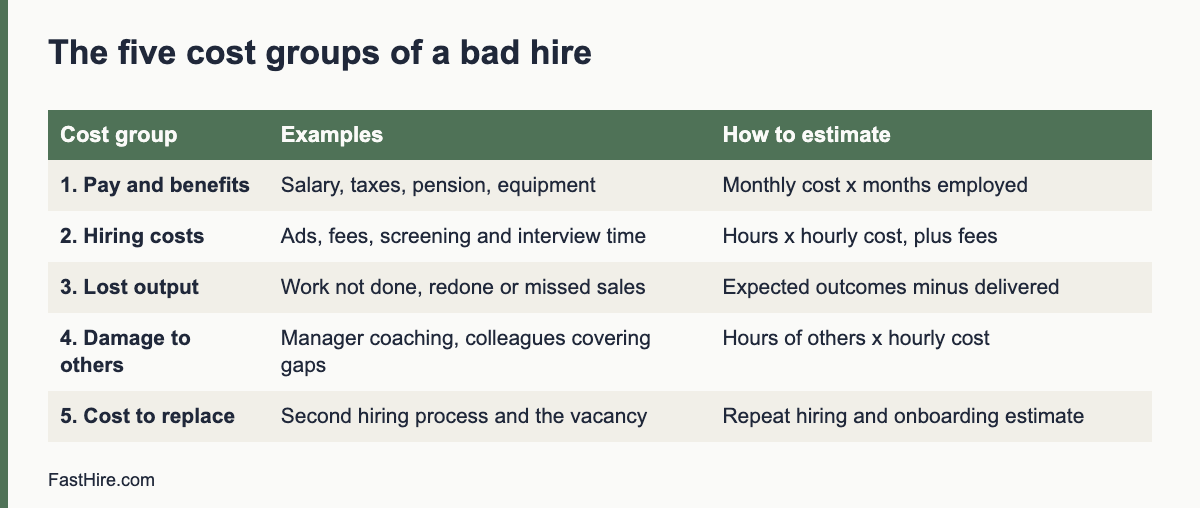
  • How to write a job description for a role that does not exist yet

    How to write a job description for a role that does not exist yet

    To write a job description for a role that does not exist yet, start with the problems the role must solve, not with a list of skills. Write three to five outcomes, turn each into tasks, then list the few skills and experience a person needs to do those tasks. Treat the first version as a draft and plan to revise it after the first interviews.

    Key takeaways

    • Start from outcomes and tasks, not from a wish list of qualities.
    • Limit must-haves to three to five items that you can check on a resume or CV.
    • Write what is not known yet, and say the role may change. Candidates respect honesty.
    • Test the draft with two people who do similar work, and with one person who does not.
    • Plan a review after the first five interviews. Change the document, not the standard for each candidate.
    x

    Why a new role is harder to write

    When a role exists, you can copy and update an old description. A new role has no history. Founders often fill the gap with a long list: “self-starter, strategic, hands-on, five years of experience, great communicator”. That list describes a person who may not exist, and it hides the real work. It also attracts few applicants, and it can exclude strong people who do not match each phrase.

    A better approach is to describe the work first. If you can describe the work in plain words, you can find people who have done something like it.

    The seven-part method

    PartQuestion to answerLength
    1. ProblemWhat is not working today, or what do we want to start?2 to 3 sentences
    2. OutcomesWhat will be true after 6 and 12 months if this hire succeeds?3 to 5 bullets
    3. TasksWhat will the person do in a normal week?6 to 10 bullets
    4. Must-havesWhich few skills or experiences are needed from day one?3 to 5 bullets
    5. Nice-to-havesWhat helps but can be learned?2 to 4 bullets
    6. ContextTeam, reporting line, hours, place, pay rangeShort list
    7. UnknownsWhat is not decided yet?2 to 3 sentences

    Part 1: State the problem

    Write the problem as if you were telling a friend. For example: “Our customers wait two days for an answer, and the founders answer most emails at night.” This helps candidates see why the role exists and helps you check whether you need a hire at all.

    Part 2: Write outcomes

    An outcome is a result, not an activity. “Answer customer emails within one working day” is an outcome. “Check the inbox” is an activity. Write outcomes for the first 6 months and the first 12 months. If you cannot write outcomes, you may not be ready to hire. Our guide to the one-page role brief goes deeper on this step.

    Part 3: List tasks

    List what the person will do in a normal week. Use verbs: answer, write, update, report, schedule, check, call. Avoid vague words such as “support” and “manage” without an object. Say how much time each task takes if you know.

    Part 4: Choose a few must-haves

    Take each outcome and ask: what skill or experience would make this task possible on day one? Write only those. Keep the list to three to five items. Each must be something a person can show on a CV or in an interview. See must-haves vs nice-to-haves and how to write requirements candidates can check themselves.

    Part 5: Name the nice-to-haves

    Nice-to-haves are skills that help, but you can teach them in the first months. Keep them short. Say clearly that they are optional so that candidates do not rule themselves out.

    Part 6: Add the context

    Include the reporting line, the team size, the hours, the place of work, the pay range and the type of contract. In some places the law requires pay information. Check the rules where you hire.

    Part 7: Be honest about the unknowns

    Say what is still open. For example: “This is a new role. We will review the tasks after three months and agree changes with you.” This honest statement attracts people who like building and filters out people who need a fixed structure.

    A template you can copy

    SectionFill in
    Job titleUse a common title that people search for
    Why this role existsTwo or three sentences on the problem
    What you will achieveOutcomes at 6 and 12 months
    What you will do6 to 10 tasks with verbs
    What you need3 to 5 must-haves, each checkable
    What helps2 to 4 nice-to-haves
    About the teamSize, manager, how you work
    Hours, place and payHours per week, location, range, contract type
    What is not decidedThe open points
    How to applyCV or resume, and one short question if needed
    Our processSteps and expected timeline

    A fictional example

    This example is invented. A small online shop has never had an operations role. The founder writes the following draft.

    PartDraft text
    TitleOperations coordinator
    Why this role existsWe ship about the same orders each week, but delays and errors take the founder’s evenings. We want one person to own the process from order to delivery.
    OutcomesWithin 6 months: orders leave within one working day. Within 12 months: the number of wrong or late orders falls and the founder no longer handles daily shipping.
    TasksCheck new orders. Pack or direct packing. Book couriers. Answer delivery questions. Track errors in a sheet. Order packaging. Suggest process changes.
    Must-havesExperience in an order, warehouse or logistics task. Clear written communication. Comfort with spreadsheets. Able to work the stated hours.
    Nice-to-havesExperience with an online shop platform. Basic knowledge of courier systems.
    UnknownsWe may add customer service tasks after three months. We will agree this with you.

    Notice that the draft says nothing about “passion” or “ninja”. It names tasks and checkable skills. Someone with warehouse or retail stock experience could apply, which widens the pool in a fair way.

    Test the draft

    1. Ask two experts. Find two people who do similar work, even in another business. Ask: “Is this realistic for one person? What is missing?”
    2. Ask one outsider. A friend outside the field should be able to explain the job back to you in two sentences. If not, simplify.
    3. Check for proxies. Remove anything that is not needed for the work, for example years of experience that function as an age signal, or a degree where a skill would do.
    4. Check the load. If the tasks need more than the hours you offer, cut tasks or raise hours.
    5. Check the pay. Compare the pay with the tasks and the market. See the cost worksheet.

    Review after five interviews

    A new role changes as you talk to people. After the first five interviews, hold a 20-minute review. Ask: Which tasks did candidates find unclear? Which must-have did nobody meet? Which one did everybody meet, so that it no longer helps you choose? Change the document, record the date, and apply the new version to all candidates, including those you have already seen. Do not lower the standard for one person you like.

    Common mistakes

    MistakeWhy it hurtsFix
    Copying a large company’s descriptionIt describes a team and tools you do not haveWrite from your own tasks
    Listing 15 must-havesStrong people rule themselves outKeep to 3 to 5
    Using “rockstar”, “ninja” or “culture fit”Vague and can exclude peopleDescribe behaviour and tasks
    Hiding the payCandidates cannot judge the fit; may be illegal in some placesGive a range where possible
    Making the role a copy of the founderNo one matches thatDescribe the work, not the person

    For more on wording the ad that you publish from this description, read how to write a job ad that attracts the right applicants. If this is your first employee, also read the first hire plan.

    Turn tasks into interview questions

    A good description doubles as an interview plan. For each must-have, write one question that asks for a real example. Ask every candidate the same questions in the same order. This is fair, and it makes answers easy to compare.

    Must-haveQuestion to askWhat a strong answer includes
    Order or logistics experienceDescribe a time you handled a busy week of orders. What went wrong and what did you change?A specific situation, the action the person took and a result
    Clear written communicationTell me about a message you wrote to explain a problem to a customer or colleague.A clear purpose, a reader in mind, a result
    Spreadsheet comfortWhat do you track in a spreadsheet and how do you check it for errors?A named task, a method and a check
    Works the stated hoursThese are the hours. Is there anything we should talk about?A direct answer. Do not ask about family or health

    Score each answer against a short scale and write the evidence. A scorecard is simple to build; see our interview scorecard template.

    What to do if the role changes after you hire

    New roles drift. After three months, hold a short meeting with the new employee. Compare the original outcomes with what really happened. Ask what takes the most time and what is missing. Update the description and agree the changes in writing. If the change is large, such as a different level of work or different hours, treat it as a contract change and take advice. Do not quietly add tasks that were not in the agreement. That causes stress and can create legal problems in some countries.

    A short, honest description at the start makes this review easy. You can show the person the original document and ask: “What is still true, and what has changed?” This is a respectful way to shape a new role with the person who holds it.

    A 15-minute checklist before you publish

    • The job title is one that people search for.
    • The first two sentences say why the role exists.
    • There are three to five outcomes.
    • Tasks start with verbs.
    • There are no more than five must-haves, and each can be checked.
    • Nothing in the text points to age, sex, race, religion, disability or family status without a job reason.
    • The pay range, hours and place are stated.
    • The unknowns are named.
    • The application step is simple and takes under 10 minutes.

    Where the description is used

    Write the full description once, then reuse it in four places. The ad uses the problem, the outcomes, the must-haves and the pay. The interview plan uses the must-haves and tasks. The offer letter uses the title, hours and place. The first-month plan uses the outcomes. When one document drives all four, candidates hear the same story at every step, and you spend less time writing. Keep one copy with a date, and update it whenever the role changes, so that nobody works from an old version.

    Official sources for this topic: EEOC: small business guidance, GOV.UK: employing people. These pages are maintained by the authorities and may change, so check them for the current text.

    Frequently asked questions

    How long should a job description be?

    One page is enough for most roles. Use short sentences and lists. Candidates read the ad, so the ad can be shorter than the internal document.

    Should I include the salary?

    Yes if you can. Pay information helps candidates decide and, in some places, the law requires it. Check the rules where you hire.

    What if I do not know the exact tasks?

    Write the outcomes and the first three months of tasks. State that the role will change and how you will agree changes.

    Can I use a template from the internet?

    You can use it as a prompt, but write your own tasks and must-haves. A generic template may contain requirements that you do not need.

    How many must-haves are too many?

    More than five is usually too many. If you have more, move the lowest ones to nice-to-haves or cut them.

    Related guides

    This is general information, not legal advice.

  • How long should hiring take? A realistic timeline for small teams

    How long should hiring take? A realistic timeline for small teams

    Hiring takes as long as the slowest step you do not plan. For a small team, a realistic plan has six stages: prepare the role, advertise, screen, interview, decide and offer, and wait for the start date. This guide shows a week-by-week template, where time is usually lost, and how to shorten each stage without cutting fairness. The times here are planning assumptions, not statistics.

    Key takeaways

    • Plan the whole journey, from role brief to start date, before you open the job.
    • The longest delays are usually waiting for decisions, scheduling and notice periods, not reading CVs.
    • Use a planning template to the start date, then replace it with your own measured times after your first hire.
    • Set a closing date, a screening day, interview slots and a decision date in advance.
    • Keep candidates informed at each stage. Silence loses good people.
    x

    Two clocks: time to hire and time to start

    People use “how long does hiring take” to mean two different things. Time to hire is the time from opening the role to the candidate accepting the offer. Time to start adds the notice period that the candidate must serve at their current job. In some countries notice periods are short, and in others they are several months. The notice period is not under your control, so ask about it early. Our first hire plan shows where each step fits.

    Be careful with published averages. Different sources count different things, and the numbers vary by industry, role and country. If you quote a statistic, link it to a source. In this guide we offer planning assumptions that you can adjust, not market statistics.

    A week-by-week template

    StagePlanning rangeMain tasksWho decides
    1. Prepare3 to 7 daysWrite the role brief, job ad and scorecard; agree pay and processYou
    2. Advertise14 to 21 daysPost the ad, answer questions, send acknowledgementsYou
    3. Screen2 to 4 daysUse a sheet to mark yes, no, unclear against the must-haves; choose who to interviewYou and a second reviewer
    4. Interview5 to 10 daysPhone screens and one or two interviews; score each one right afterYou and one more person
    5. Decide and offer3 to 5 daysCheck references, decide, call, send the offer; give time to replyYou
    6. Notice and startVariesWait for notice period; keep in touch; prepare onboardingCandidate and you

    This adds up to roughly 5 to 8 weeks to the offer, plus the notice period. If your applicants are mostly unemployed or available at once, the start date can be much sooner. If they are senior and need to give three months’ notice, it will be later. These ranges are a starting point for your own plan.

    Where time is usually lost

    DelayWhat happensFix
    Unclear roleWeeks of rewriting the ad and criteriaWrite a role brief first
    Open-ended adNo closing date, so screening never startsSet a closing date two to three weeks ahead
    Slow screeningCVs wait in an inboxBook a screening session on the calendar. Use a 20-minute method
    SchedulingMany emails to find an interview timeOffer fixed slots on set days
    Waiting for a second opinionDecision sits for a weekName the decision maker and the date
    Reference checks lateAnother week lostAsk for referees at the final interview
    Offer too slowThe best candidate accepts another jobKeep the offer within 2 days of the decision
    Notice period surpriseStart date moves by monthsAsk about notice at the first call

    How to shorten each stage without lowering quality

    Prepare

    Prepare one hour in advance for each later step: the ad, the question list and the scorecard. Many delays start because someone writes the question list on the morning of the interview.

    Advertise

    Use channels that reach the right people. If you get enough suitable applicants in the first week, close early and say so in the ad (“we may close earlier if we receive many applications”). Do not leave the ad open for months. See where to post a job when you have no budget.

    Screen

    Screen in one block. Mark the same criteria for every person. If you have a second reviewer, split the pile in two and compare a sample of 10.

    Interview

    Book all first interviews in two or three days. Use 30 to 40 minute slots with 15 minutes between for notes. Use the same questions. See how to run a first interview.

    Decide and offer

    Hold a decision meeting right after the last interview, or on the next morning. Review the scorecards and decide. Then call the candidate and send the written offer on the same day. See how to make a job offer.

    What not to speed up

    • Do not skip a written list of criteria. It slows you down later when you must justify your choice.
    • Do not skip right-to-work checks or other legal checks.
    • Do not pressure candidates with unreasonable deadlines.
    • Do not choose the first person who looks good. Compare at least three people against the same criteria, if you have them.
    • Do not cut feedback to candidates. A short message takes a minute.

    Speed and fairness work together when the process is clear. A written plan speeds up every step, and it also shows that you treated everyone the same.

    A calendar example (fictional)

    WeekAction
    Week 1Write role brief and ad; set pay; set interview days in the calendar
    Weeks 2 and 3Ad open; answer questions; acknowledge applications
    Week 4, MondayClosing date. Tuesday: screening session. Wednesday: invitations sent
    Week 4, Thursday and FridayPhone screens
    Week 5, Monday to WednesdayInterviews
    Week 5, ThursdayDecision meeting; call preferred candidate; ask for referees
    Week 6, MondayReferences checked
    Week 6, TuesdayOffer sent; reply date Friday
    Week 7Candidate accepts; give notice; keep in touch
    Week 11Start date, if notice is four weeks

    The dates are invented. Replace them with your own and put each one in your calendar before you post the job.

    Tell candidates the timeline

    Put the timeline in the ad and in the first message. For example: “Applications close on [date]. We will invite people to interviews on [date] and decide by [date].” People plan around dates. If your dates slip, tell them. A short message that says “we need two more days” is better than silence.

    Measure your own time

    NumberHow to measureUse
    Days from opening to closingDate posted to date closedCheck ad length
    Days from closing to interviewClosing date to first interviewCheck screening speed
    Days from last interview to offerDate of last interview to date of offerCheck decision speed
    Days from offer to acceptanceOffer date to replyCheck offer clarity
    Days from acceptance to startReply date to startPlan notice periods

    Record these in a spreadsheet for every hire. After two or three hires you will know your real timeline and where you lose time. Our upcoming spreadsheet tracker guide shows a simple layout. For the cost of waiting, see what a bad hire really costs and the cost worksheet.

    Message templates that keep the timeline on track

    Acknowledgement after an application

    Hello [Name],

    Thank you for applying for the [job title] role. We received your application. Applications close on [date]. We will contact everyone by [date] with a clear answer about the next step.

    Best wishes,
    [Name]

    Interview invitation with slots

    Hello [Name],

    Thank you for your application. We would like to invite you to a 40-minute interview for the [job title] role. These slots are open on [dates and times]. Please reply with the one that suits you. The interview will be [in person at address / by video]. If you need any adjustment, please tell us and we will arrange it.

    Best wishes,
    [Name]

    Delay notice

    Hello [Name],

    We need [number] more days to finish our interviews. We will contact you by [new date] with a decision. Thank you for your patience.

    Best wishes,
    [Name]

    If you must hire faster than the template

    Sometimes a person leaves with little warning, or a contract starts soon. In that case, change the plan in these ways, and keep the fair steps.

    OptionHow it saves timeRisk to manage
    Shorter ad periodClose after 7 to 10 daysFewer applicants; check the pool is still varied
    Combine phone screen and first interviewOne conversation instead of twoLonger call; use the same questions for all
    Interview in one blockAll interviews on two daysPlan your notes and scoring time
    Use temporary coverA temp or freelancer covers the gapCheck the status rules in employee or contractor
    Ask finalists for references earlySaves days at the endAsk for permission first

    Do not drop your criteria, your scorecard or the legal checks. A hire made in a hurry that fails costs more than a short delay. Read what a bad hire really costs to compare.

    A 30-minute decision meeting

    Many hires stall at the decision. A fixed agenda keeps the meeting short and fair.

    MinutesItemRule
    0 to 5Reminder of the must-haves and the scorecard scaleEveryone uses the same criteria
    5 to 15Each interviewer reads their scores and the evidence behind themScores come first, opinions second
    15 to 22Discuss differences of two points or moreReturn to the notes, not to memory
    22 to 27Name the top choice and a back-upWrite the reasons
    27 to 30Agree who calls, when and what to offerSet the date

    If the group cannot agree, do not extend the process by default. Ask which must-have is the real point of difference and whether you can test it with a short task or a reference call. Then decide by the agreed date.

    When a candidate has other offers

    Good candidates often have more than one process running. Ask in the first call: “Are you in other processes? What timeline are you working to?” Do not pressure or insult. If your timeline is longer than theirs, say what you can do, and let them decide. If you really want a person, you may move your steps closer together, but do not skip checks. Never invent a rival offer or a false deadline. Honest timing builds trust, and trust makes acceptance more likely.

    Keep a log for next time

    After the hire, spend 20 minutes with a sheet and write the real dates, the delays and one change to make. Keep it with the role brief. Next time you hire, start from this log and your timeline will be shorter. Over several hires it becomes your own benchmark, which is more useful than any general average.

    Official sources for this topic: US Small Business Administration: hire and manage employees, GOV.UK: employing people. These pages are maintained by the authorities and may change, so check them for the current text.

    Frequently asked questions

    How long does it take to hire someone?

    It depends on the role, the market and your process. Plan 5 to 8 weeks to an accepted offer for a typical small business role, plus the candidate’s notice period. Measure your own times.

    Can I hire in one week?

    Sometimes, for simple roles with available candidates, if you prepare in advance. Do not skip fair steps or legal checks to go faster.

    What is the biggest cause of delay?

    Waiting for decisions and scheduling. Fix dates in advance and name one decision maker.

    Should I tell candidates the timeline?

    Yes. A clear timeline reduces drop-out and questions.

    What if the best candidate has a long notice period?

    Ask if they can start part-time earlier, if their contract and your rules allow it. Otherwise plan temporary cover. Do not ask them to break their contract.

    Related guides

    This is general information, not legal advice.